
Should You Back Favourites or Underdogs in Tennis?
 Available in US
Loading...

The wrong question, asked confidently
Punters love to declare themselves a favourites bettor or an underdog bettor, as if it were a personality type. I used to do it myself, proudly backing outsiders because the payouts felt thrilling and the favourites felt boring. It took a long losing run to teach me that “favourite or underdog” is the wrong question entirely. The right one is “where does the market misprice more often,” and the answer to that has nothing to do with which side feels more exciting.
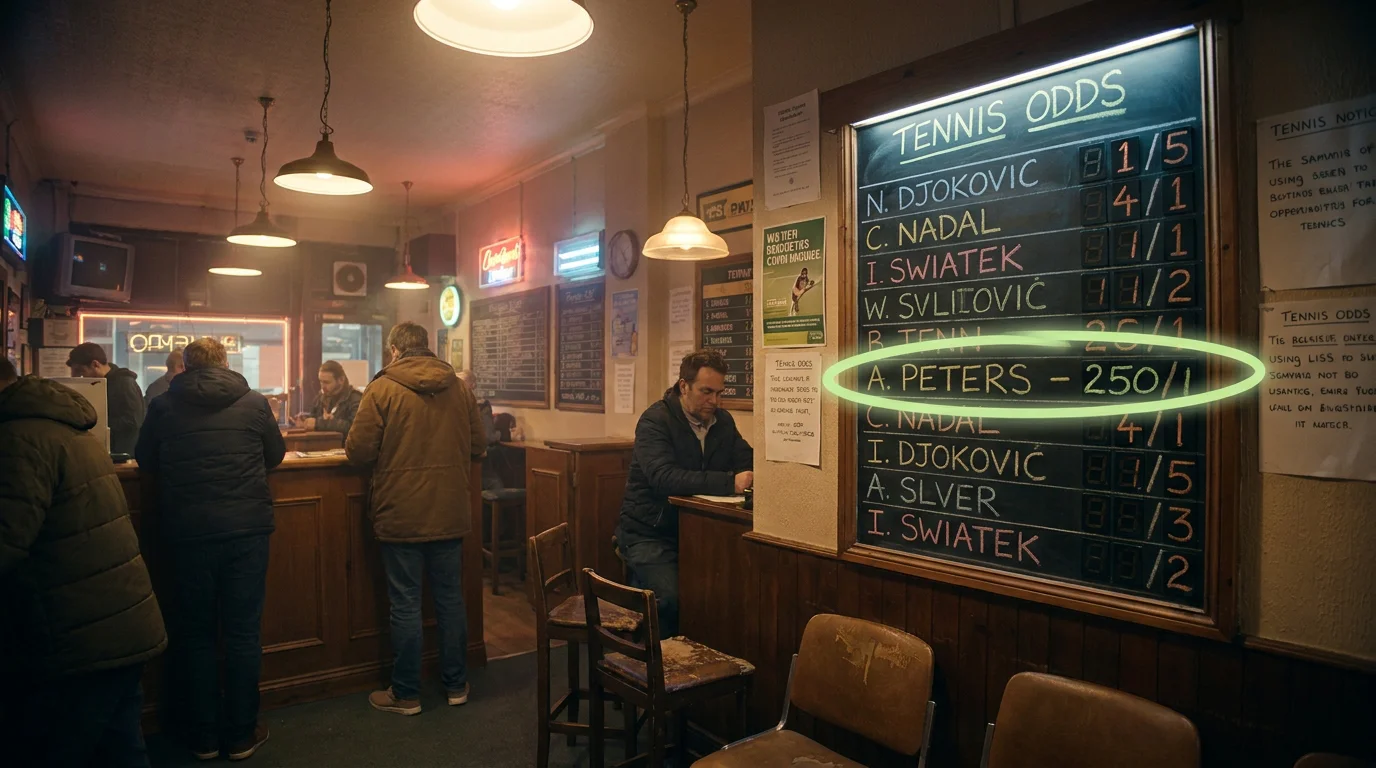
The decisive fact here is the favourite-longshot bias, documented across tennis betting markets for the better part of two decades. Longshots are systematically overbet relative to their true probability, which means underdogs are, on average, worse value than their tempting odds suggest, and heavy favourites historically offer the least-bad expected value. That doesn’t make favourites a licence to print money, because their margin is thin too, but it should permanently end the romantic idea that backing outsiders is a clever contrarian edge. Usually it’s just paying over the odds for a thrill.
The case for favourites
Backing favourites feels unglamorous, and that’s precisely why there’s value in it. The favourite-longshot bias means the crowd piles onto outsiders chasing big returns, which pushes underdog prices shorter than they should be and, by the same token, leaves favourite prices fractionally more generous than the bias-free market would set. You’re being rewarded, modestly, for taking the side the recreational money avoids.

The mechanism is behavioural. People remember the longshot that landed and forget the ninety that didn’t, so they consistently overrate outsiders and overbet them. The favourite, meanwhile, is the “obvious” pick that offers small returns and little story, so it attracts less of that distorting money. Across a large sample, betting fair-priced favourites bleeds less to the bias than chasing underdogs does, which is why the sharpest tennis bettors I know are far more often backing the shorter price than the longer one.
But, and this matters enormously, short does not mean safe. A favourite at 1.20 wins most of the time, but the few losses are brutal, and the thin margin means a single upset wipes out a long string of wins. The discipline is to back favourites only when the price still contains value, when you rate their true probability above the implied figure, not simply because they’re likely to win. A likely winner at a bad price is still a bad bet, and the favourite-longshot bias rewards favourite-backing only when you’re paying a fair or generous price for that likelihood. The full method of judging whether any price, short or long, contains an edge sits in my colleague’s guide to finding value in tennis.

The case for underdogs
Despite all that, underdogs aren’t a dead end, and dismissing them entirely would be as lazy as worshipping them. The bias says outsiders are overbet on average, but averages hide exceptions, and the exceptions are where underdog value lives. Specific situations consistently produce mispriced outsiders, and the punter who hunts those rather than backing longshots indiscriminately can genuinely profit.
Surface and format create the clearest underdog windows. A specialist outsider on their favoured surface, especially in best-of-three where the upset window is wide, can be a far better proposition than their ranking suggests, because the market anchors to overall standing rather than surface-specific strength. A big server on a fast court, an awkward stylist with a winning record against a particular favourite, a fresh underdog against a fatigued seed, these are the spots where the outsider’s true probability outruns the biased price. The skill is patience: waiting for the genuine mispricing rather than betting outsiders because the odds look juicy.

One caution worth stating plainly. When an underdog wins unexpectedly, especially on the lower tours, suspicion sometimes follows, but a surprising result is not evidence of anything untoward. As one integrity body puts it, an alert on its own is not evidence of match-fixing, and unusual outcomes occur constantly for innocent reasons like form, fatigue and conditions. Back underdogs for sound value reasons and accept that upsets, clean ones, are simply part of a sport where the better player doesn’t always win.
Price sensitivity and variance
Here’s the dimension that ties it together and that most punters never think about: the same edge behaves completely differently at different prices, and variance is the reason. Backing short favourites is a high-strike-rate, low-variance approach, you win often but each win is small, so your bankroll grows in a smooth line punctuated by the occasional painful upset. Backing underdogs is the reverse, a low-strike-rate, high-variance approach where you lose frequently and win big, riding long droughts between paydays.
Neither is inherently better, but they demand different temperaments and different bankrolls. A favourite-backing approach can run a tighter bankroll because the swings are gentle, whereas an underdog approach needs a much deeper reserve to survive the inevitable losing runs without going broke before the big wins arrive. Many punters who fancy themselves underdog bettors are simply under-bankrolled for the variance they’re taking, and they bust not because their picks were wrong but because they couldn’t outlast the drought.
Price sensitivity sharpens the point further. A small error in your probability estimate barely dents a short favourite bet, because the price is close to certain and the payout small, but the same error on a longshot can flip a genuine value bet into a losing one, since at long odds a few percentage points of probability swing the expected value dramatically. This is why underdog betting punishes sloppy estimation so much harder than favourite betting does. If you back outsiders, your read has to be sharper, not just braver, because the odds magnify every mistake you make about the true probability.

So the honest answer to “favourites or underdogs” is: neither, exclusively. Back favourites when the bias leaves them fairly priced and you want low variance, back underdogs when a specific situation mismatches the price and you have the bankroll to ride the swings, and in both cases let the value, not the romance, decide. The punters who pick a side and stick to it as an identity are betting their personality. The ones who profit are betting the mispricing, wherever on the board it happens to sit that day.
Articles
Written by the editors at AceEdge.
