
Court Speed and Conditions in Tennis Betting
 Available in US
Loading...
Hard court is not one surface
A punter I know lost steadily for a season backing big servers on hard courts, convinced he had a reliable angle. His mistake was treating “hard court” as a single thing. The hard court in Shanghai and the hard court in Miami are technically the same category and play like different sports, and once he started pricing them separately his results turned around. Court speed, not just court type, is the variable the lazy bettor ignores and the sharp one prices.

The numbers behind this are stark. At the fastest indoor hard event on tour, servers held around 87.8% of their service games and won roughly 77.3% of first-serve points, the kind of dominance that makes breaks of serve rare and tiebreaks routine. Drop onto slow clay and those figures fall sharply, because the surface gives returners time to neutralise even a heavy serve. Same player, same racket, wildly different probability of holding, and a market that doesn’t always keep up.
The lesson is to stop thinking in three buckets, clay, grass and hard, and start thinking in a spectrum of speed. A slow hard court in humid air plays closer to clay than to a quick indoor court, and the serve-reliant player you fancied is a worse bet than the surface label suggests.
What actually changes court speed
Court speed is engineered and conditioned, not fixed, and several levers move it. The first is the surface composition itself: the amount and coarseness of sand in the acrylic top layer on a hard court determines how much the ball grips and slows on the bounce. Tournaments choose this deliberately, which is why two hard-court events on the same continent can play at opposite ends of the speed range.

Then there’s the environment. Altitude thins the air, so the ball travels faster and bounces higher, which is why high-altitude events reward big servers and aggressive ball-strikers more than their sea-level equivalents. Temperature and humidity matter too: hot, dry air speeds the ball through the court, while cold or humid conditions make it sit up and slow down, handing the advantage back to the returner. First-serve effectiveness sits at roughly 67.5% on hard and around 62.4% on clay for the men, and conditions can nudge a given event meaningfully along that range before a ball is even struck.
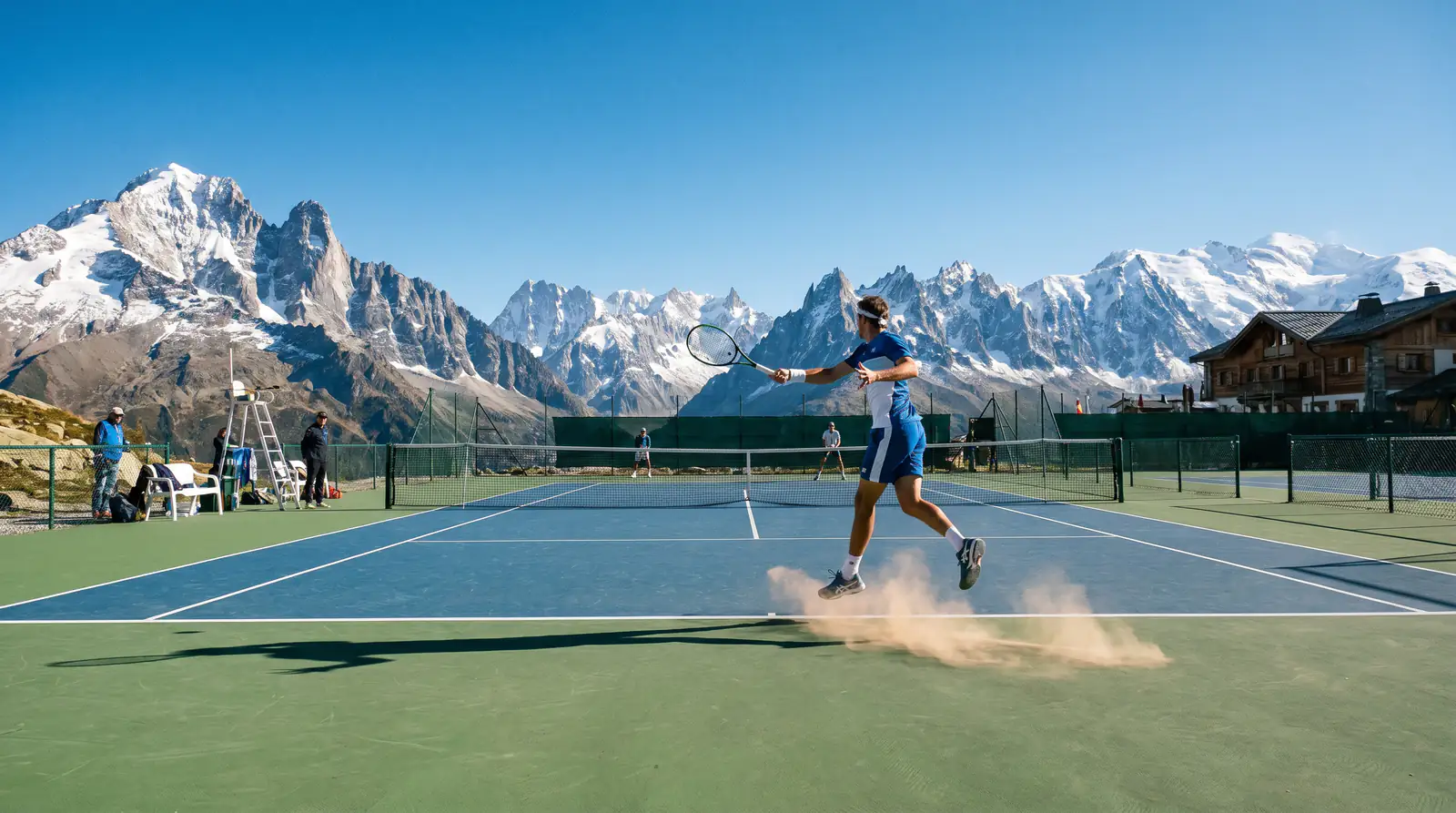
The reason this matters for betting is that the market prices the player and the tournament, but does not always fully price the specific conditions on the specific day. As one analyst put it, “Don’t feel compelled to bet on every match; choose your wagers strategically,” and conditions are exactly the kind of filter that tells you which matches are worth your stake. When the forecast and the venue point to a fast, serve-friendly day, the big server is underpriced relative to a market anchored to season-long averages.
Indoor versus outdoor
Indoor courts are the great equaliser for servers, and understanding why turns a vague intuition into a usable edge. The moment you move a match indoors, you remove wind, sun and the variability of weather, and you almost always get a faster, more predictable surface. No gusts pushing the ball-toss around, no sun in the server’s eyes, no swirling air to drag the ball down. The serve becomes a more reliable weapon, and hold rates climb.
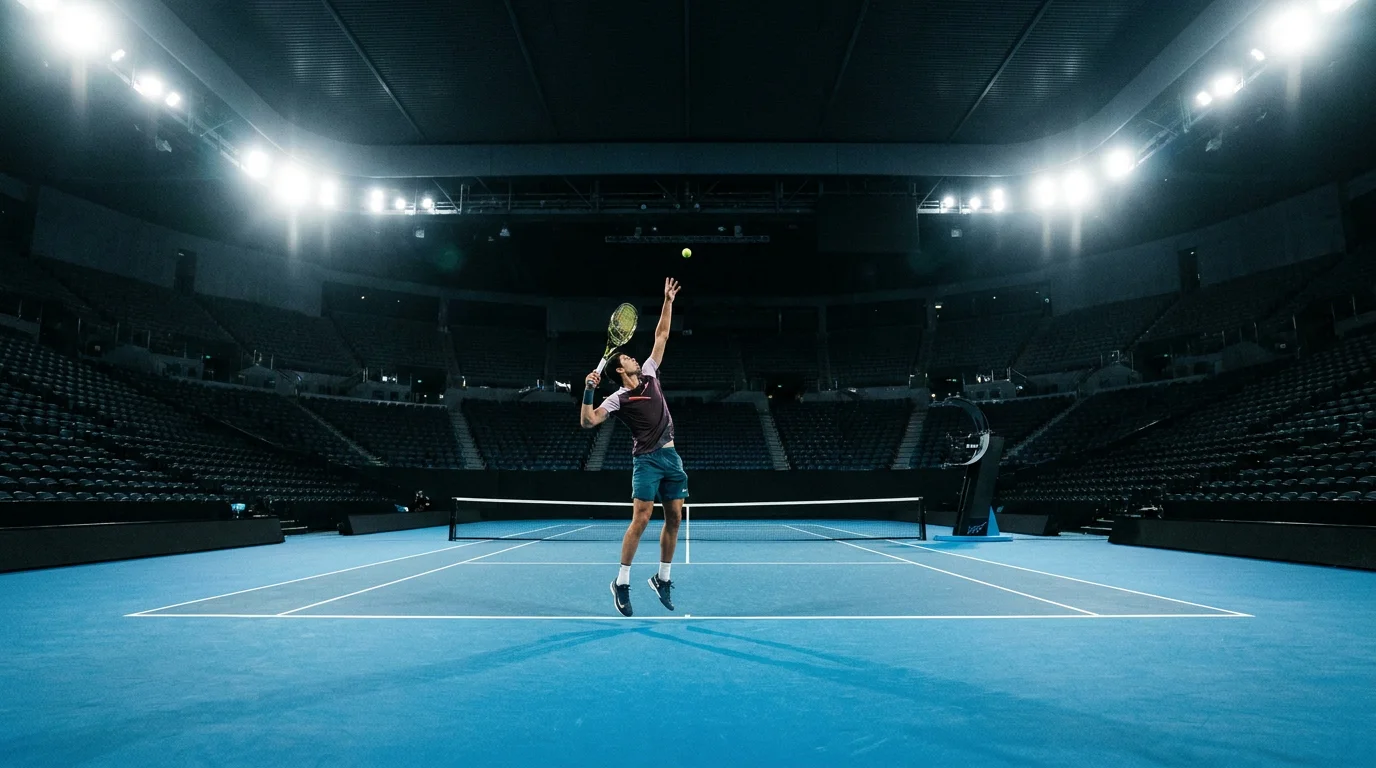
This is why a player can look ordinary outdoors all summer and then go on a tear during the indoor swing at the back end of the season. The conditions suit their game in a way the headline rankings don’t capture. I pay close attention to the transition between outdoor and indoor seasons, because the market often lags a week or two behind the surface change, still pricing players on their outdoor form while they’re now playing on a quick indoor court that flatters their serve.
The flip side is the returner and the grinder, who lose their natural ally when the wind drops and the court speeds up. A baseline specialist who thrives on dragging opponents into long rallies finds those rallies harder to construct indoors, where points end faster and the server dictates. Surface category alone won’t tell you this; the indoor-outdoor distinction will, and it sits squarely within the broader question of how court surface decides tennis bets.
Weather, balls and the details that move a price
The smallest details often carry the cleanest edges, because almost nobody prices them. Take the balls. Different tournaments use different ball brands and specifications, and a heavier, fluffier ball slows the game down and blunts a big serve, while a lighter, faster ball does the opposite. Players grumble about ball changes constantly, and those grumbles are information: when a server complains a tournament’s balls are killing his serve, the market rarely adjusts, and his hold rate may genuinely suffer.
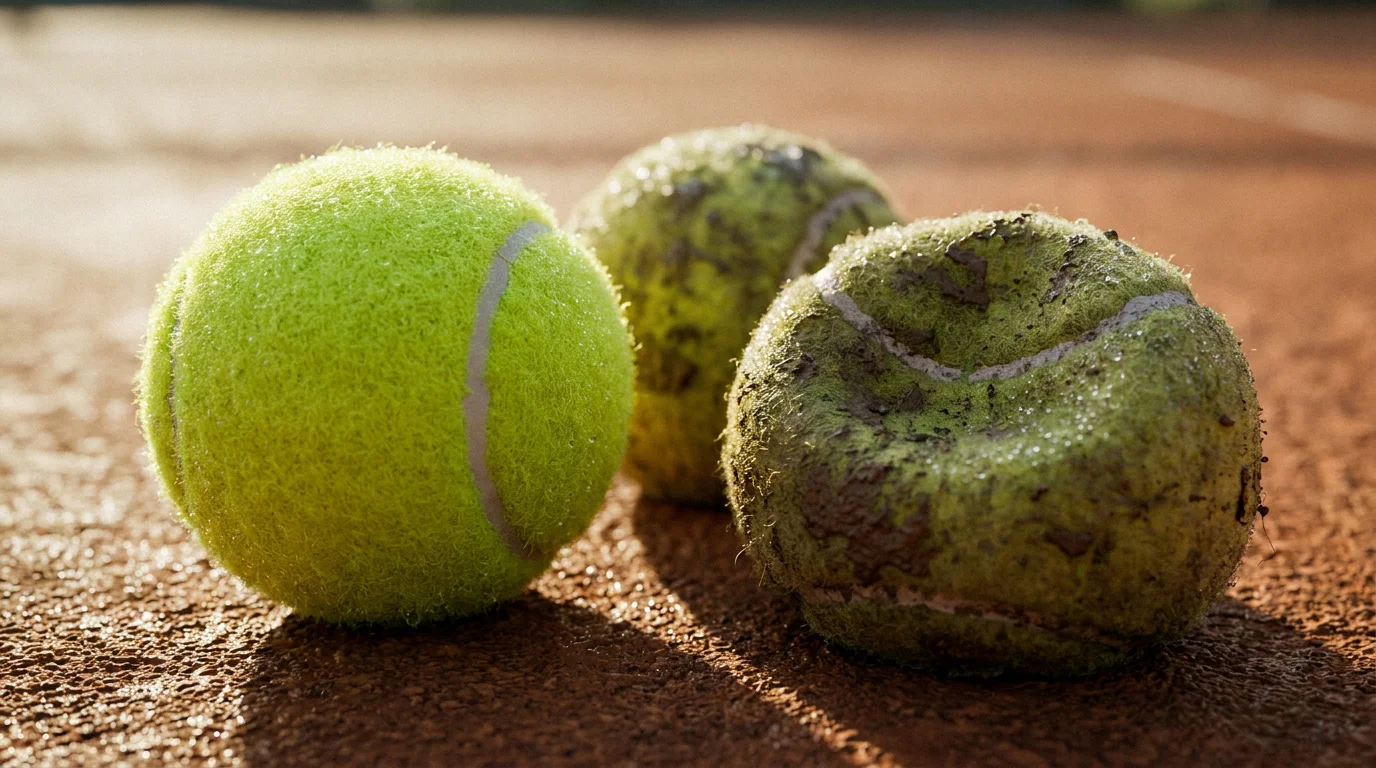
New balls versus old matters within a match too. Fresh balls fly faster and harder, favouring the server, which is why the games immediately after a ball change can swing the rhythm of a set. Combine that with weather, a hot afternoon session that speeds the court versus a cool evening one that slows it, and you have a set of micro-conditions that the season-long price simply cannot contain.
Humidity deserves its own mention because it works against the server in a way that surprises people. Damp air is heavier, the ball absorbs moisture and slows, and a serve that flies through a dry court sits up invitingly on a muggy one. The same first-serve weapon that wins free points in the morning can become a liability by a humid late-night session, and a returner who struggled early can find the conditions suddenly on their side. I’ve watched matches where the only thing that changed between sets was the air, and the price never moved to reflect it.
I won’t pretend every one of these is individually decisive, but stacked together they tilt matches, and the punter who notices them is buying value the market left on the table. Read the conditions before you read the form, and you’ll back the right player on the right day rather than the right player on the wrong one.
Articles
Prepared by the AceEdge editorial staff.
