
How Court Surface Decides Tennis Bets: Clay, Grass and Hard
 Available in US
Loading...
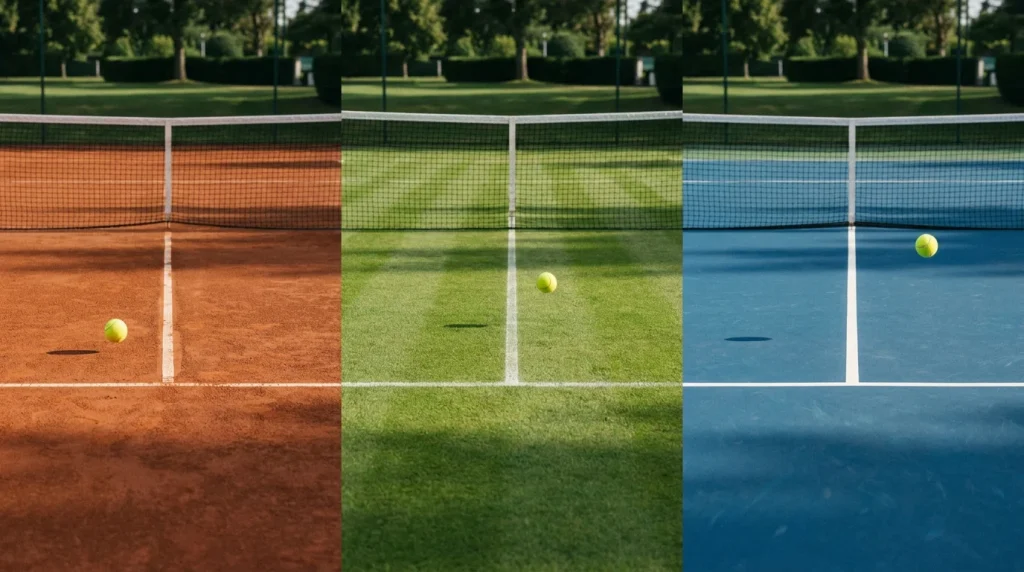
Why surface is the first thing I check, not the last
The first season I took tennis seriously, I lost a tidy sum backing a clay-court specialist on grass at short odds because the name was familiar and the form line looked tidy. The match was over in eighty minutes. I had treated the surface as decoration — a bit of context to nod at after I had already decided who I fancied. That afternoon taught me to flip the order entirely, and I have never gone back.
Surface is not background. It is a measurable shift in how often a player holds serve and how effective a first delivery is, and that shift feeds straight into the fair price of a match. When most punters read “surface matters” in a tipster column, they treat it as a vibe. I treat it as numbers I can put on a notepad before I look at a single price. First-serve effectiveness on the men’s tour runs at roughly 62.4% on clay, around 64.2% on grass and about 67.5% on hard court — meaning hard courts hand servers an edge of somewhere between five and ten per cent over clay. That gap is not trivia. It changes how likely a favourite is to grind out the straightforward holds that protect a lead, and it changes how often an underdog gets the free points that keep them in a set.
So this article does what the affiliate guides refuse to do. It turns “surface matters” into figures you can actually price. I will walk through hard, clay and grass one at a time, explain why the serve-hold gap moves the line, show why two hard courts at two tournaments are not the same hard court, and finish on the question every bettor eventually asks — which surface gives me the most trustworthy favourites. The aim throughout is simple: by the end you should be able to look at a draw and know, before the market tells you, where the value is likely hiding.
How a few percentage points of hold swing the whole price
Here is a thought experiment I run with anyone who tells me serve stats are for nerds. Picture two identical players, same ranking, same form, and put them on a court where each holds serve 90% of the time. Now drop that hold rate to 75% and play the match again in your head. The first version is a tense, low-break grind where the favourite’s small edge barely gets a chance to show. The second is a scrappy, break-heavy scrap where the better returner suddenly has far more bites at the cherry. Same two players. Completely different match. That is what surface does — it sets the volatility dial.
Hold of serve, for anyone newer to this, is simply the share of service games a player wins. It is the single most useful number in tennis betting because tennis is a sport built on serve. The higher the hold rate across a match, the fewer breaks happen, the closer the result tracks the favourite’s true superiority, and the more reliable short prices become. The lower the hold rate, the more chaos enters, and chaos is the underdog’s best friend.
This is why the same player carries a different fair price depending on where they are standing. A big server who holds at 87% on a quick hard court might hold closer to 78% on slow clay, where the ball sits up and returners get a swing at it. The bookmaker knows this and adjusts. The edge for us comes when the market over-corrects, or fails to correct enough, for a player whose game is unusually surface-dependent.
The clearest illustration of how far the dial can swing comes from the fastest indoor event on the men’s calendar. At the season-ending championships in Turin, played on a slick indoor hard court, servers have held roughly 87.8% of their service games and won about 77.3% of first-serve points. Compare that to a heavy clay week where hold rates fall away sharply, and you can see the spread between surfaces is enormous even before you factor in the players involved. When hold rates sit that high, breaks become precious, sets routinely run to tiebreaks, and a single mini-break can decide everything. That has direct consequences for which markets are worth touching, a point I will come back to.
The practical takeaway is this: before I price a match, I ask what the surface does to the expected hold rate of both players, and whether that pushes the match towards a serene serve-fest or a volatile breakfest. That single question reframes everything that follows — totals, handicaps, even whether the favourite’s short price is honest.
Hard court: where favourites are at their most honest
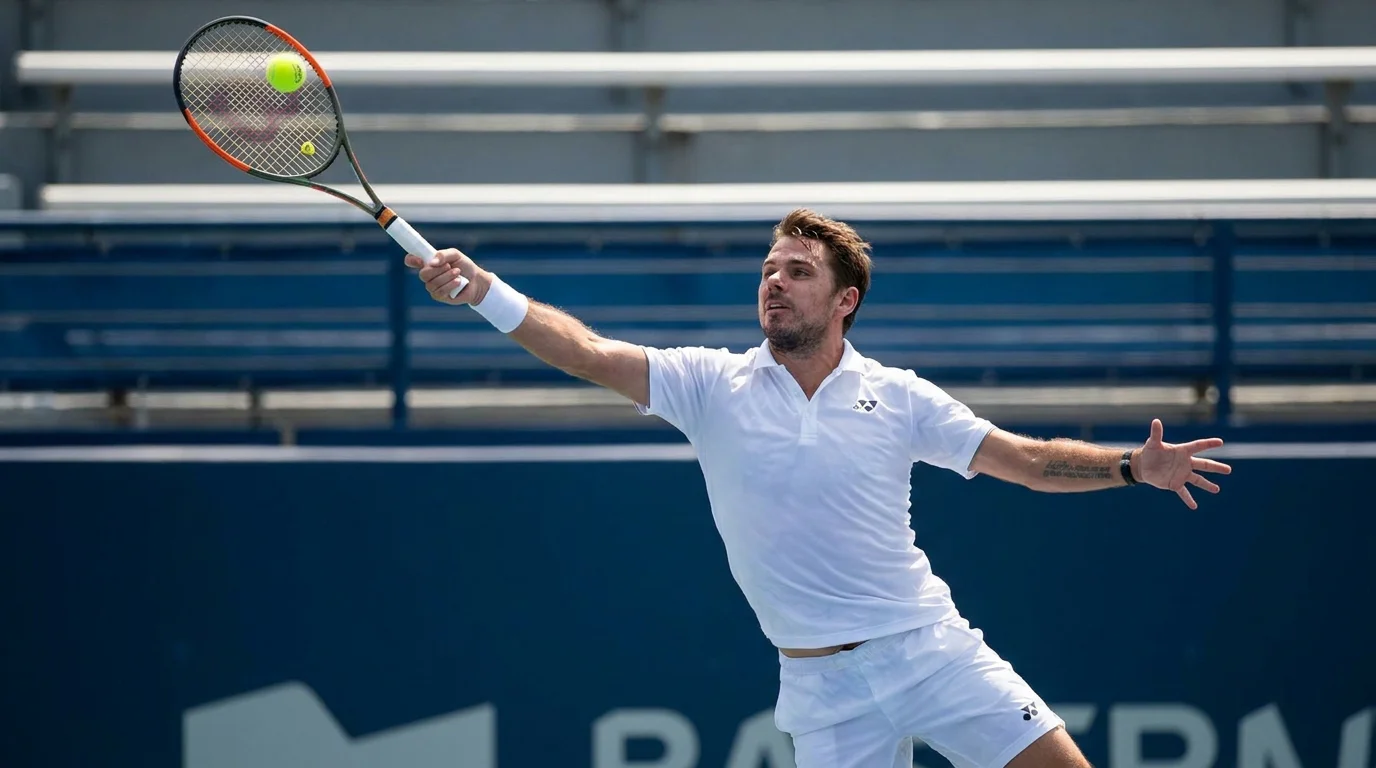
If you forced me to bet on only one surface for the rest of my life, I would pick hard court without hesitating, and the reason is boring in the best possible way. Hard courts are the most predictable surface, which means the favourite’s price is usually the most honest. I make most of my profit not from spectacular upsets but from the quiet reliability of a strong player on a surface that rewards strength.
Hard courts give servers the highest first-serve effectiveness of the three surfaces — around 67.5% on the men’s tour — and the bounce is consistent enough that the better player can impose their game without the surface conspiring against them. Roughly two-thirds of the professional calendar is contested on hard courts, so it is also where players accumulate the largest, most reliable sample of form. More matches on a surface means less noise in the data, and less noise means the market price and the true price tend to sit closer together. That is not glamorous, but it is bankable.
There is a texture to hard courts worth understanding. The category covers everything from a gritty, slower acrylic in the autumn swing to a fast, low-bouncing surface indoors. The 2024 data showed that between about 64.8% on clay and 75.9% on hard court of first-serve points ended in short rallies, with hard court producing the highest proportion of quick, serve-dominated points. That tells you the average hard court rewards the player who dictates early — the heavy first serve, the punishing first strike off the return. When I am assessing a hard-court match, I am looking for the player whose game gets the most reward from those short, decisive points, and I will happily back them at a price that the casual market has shaded towards the more famous name.
Where hard court catches people out is the assumption that one hard court equals another. It does not, and that is important enough that I have given it its own section below. For now, the headline is that hard court is where I am most comfortable backing a clear favourite at a short price, because the surface is doing the least to manufacture variance. When a top player is in good form on a true hard court, the upset routes are narrower than on any other surface, and that narrowness is exactly what a short price is supposed to reflect.
One caution: short, honest prices do not mean automatic value. If the market has the favourite at the right price, there is no edge in backing them — you are simply paying fair odds minus the margin. The hard-court opportunity comes when a returner-heavy underdog is overpriced because the crowd has fixated on the favourite’s reputation rather than the surface reality. On a quick hard court, that returner has fewer routes back into the match than the price implies, and that is a fade worth taking.
Clay court: the surface that pays the patient and punishes the lazy
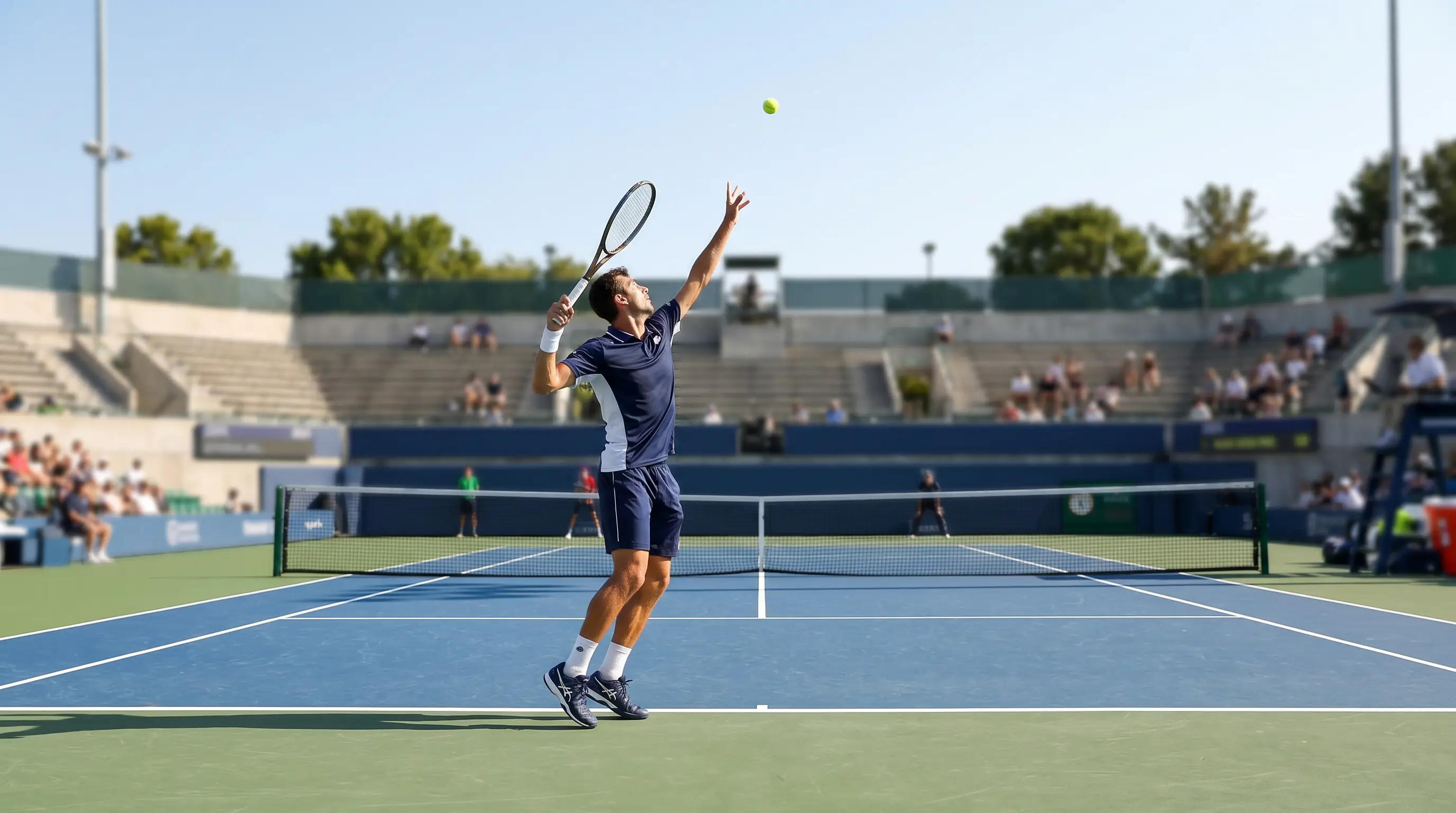
Clay is where I made my early mistakes and, eventually, my steadiest money. The reason is that clay rewards a completely different skill set, and the market is forever slow to respect it. The single most extreme illustration I know: across 2011 to 2020, one player posted a clay-court win rate of 90.98% — a figure so high it almost stops looking like sport and starts looking like a force of nature. That is the ceiling of what surface specialisation can do, and it is the reason I never, ever dismiss a clay specialist just because their hard-court ranking is modest.
On clay the ball sits up and slows down. First-serve effectiveness drops to around 62.4% on the men’s tour, the lowest of the three surfaces, which means the serve stops being the trump card it is on hard or grass. Points get longer, returners get more swings, and the premium shifts from raw power to movement, stamina, topspin and the patience to construct a point over many shots rather than end it in two. A player who wins by serving big and ending rallies fast is materially weaker here than their ranking suggests. A player who slides, defends and grinds is materially stronger.
This creates one of the most reliable angles in the sport. When the clay swing arrives in the European spring, the market is still anchored to hard-court form from the previous months. Big servers carry prices that flatter them, and clay grinders — often lower-ranked names who only come alive on the dirt — are overpriced as underdogs. I spend that period hunting for the clay specialist whose game suits the surface far better than the line suggests, and fading the powerful favourite whose primary weapon has been blunted by the bounce.
The flip side is patience, both in the players and in me. Clay matches are longer and more volatile in-running than hard-court matches, because breaks come more freely and momentum genuinely swings. That volatility is precisely why pre-match value exists — but it also means a clay favourite, even a good one, will drop sets they would never drop on hard court. If you are betting set handicaps or anything that needs the favourite to win comfortably, clay is the surface where you must respect the underdog’s capacity to steal a set. I have lost more handicap bets to clay-court “blips” than to any genuine upset.
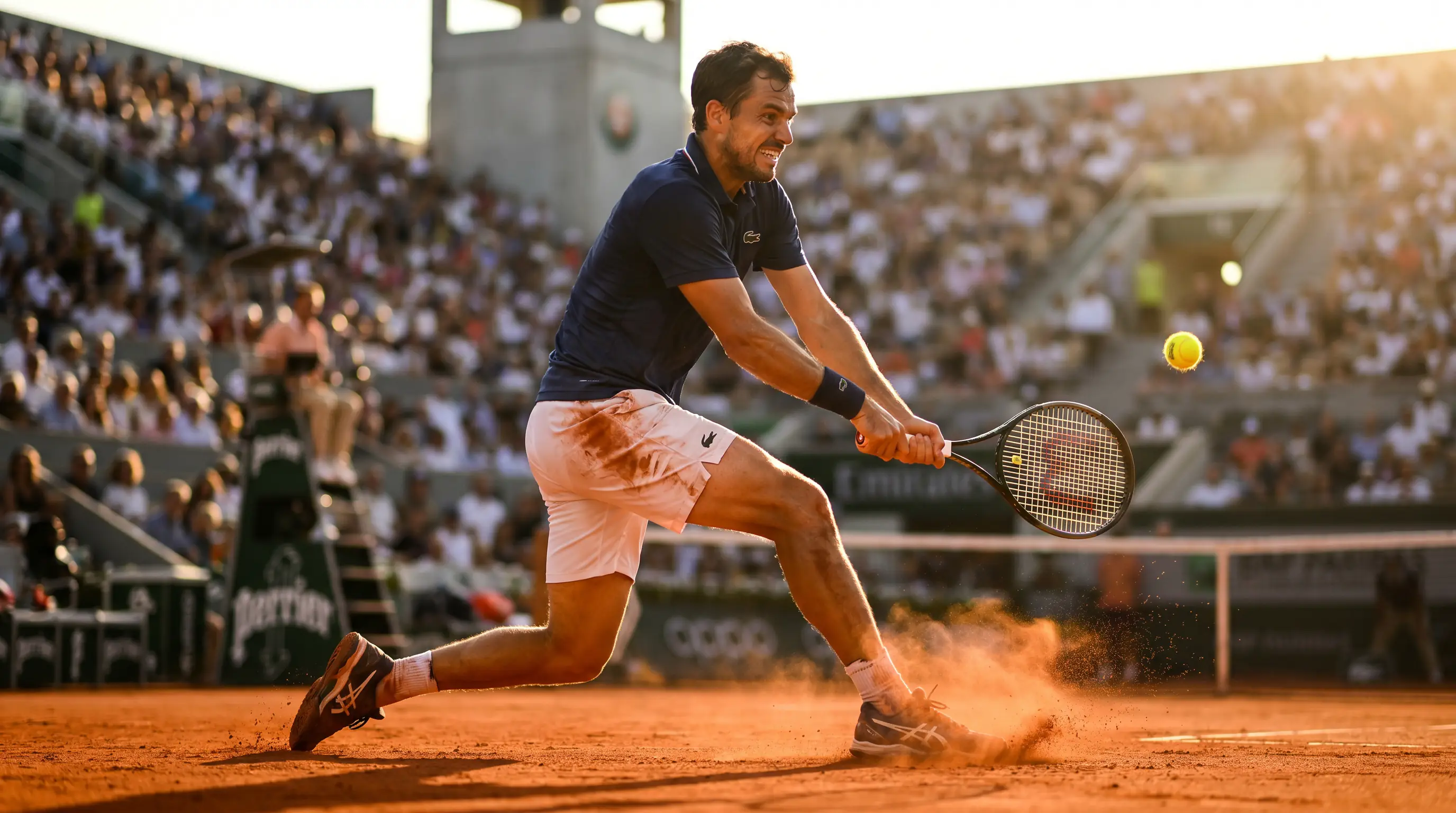
So my clay rule of thumb is straightforward: back the surface fit, not the name; expect the favourite to be tested; and treat the early weeks of the swing as the richest hunting ground, because that is when the market’s hard-court memory is most stubbornly wrong.
Grass court: short, sharp and built for the upset
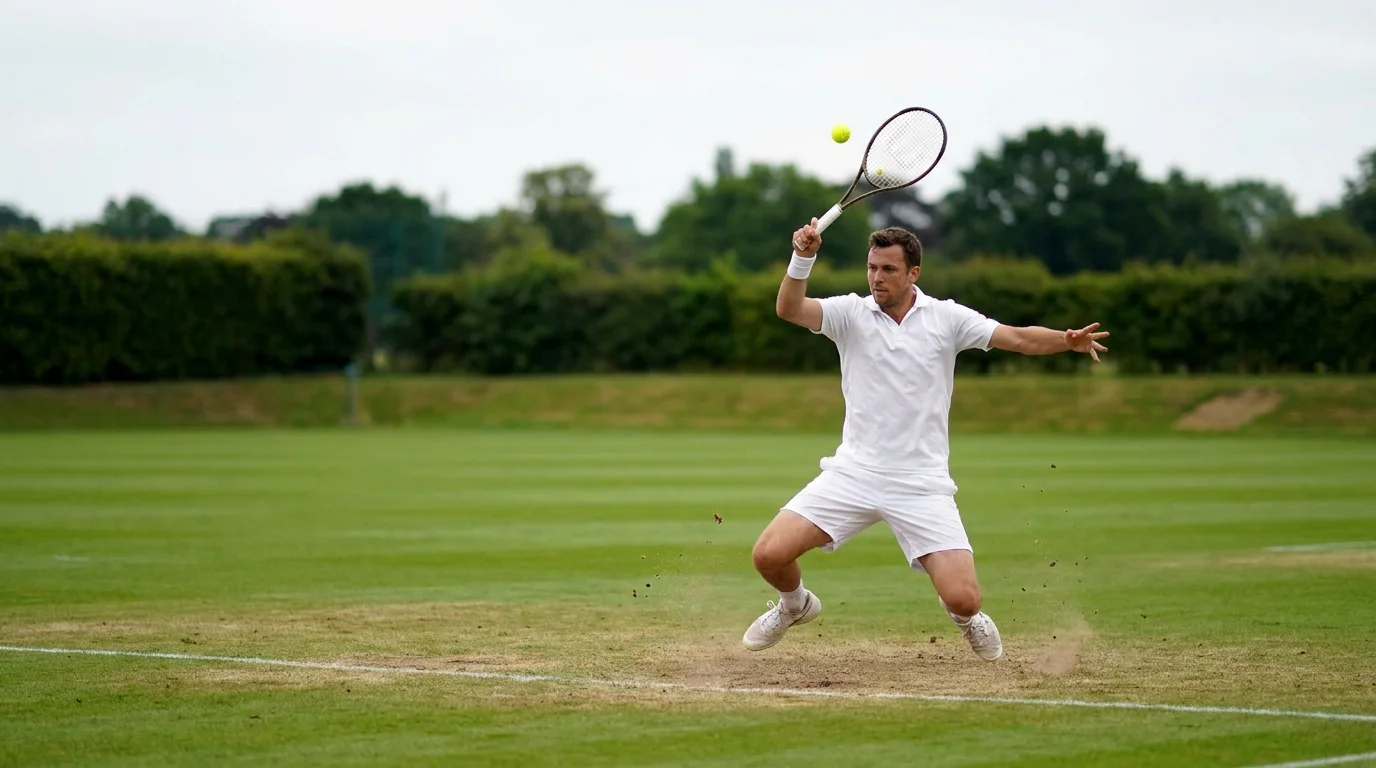
Grass is the surface that has cost me the most money and taught me the most discipline, and the lesson fits in a single sentence — on grass, the server is king and the underdog is dangerous. The season is brutally short, the surface is the fastest of the three, and the combination produces a higher proportion of tiebreaks and a genuinely elevated upset rate compared with clay. If you walk into the grass swing with hard-court instincts about how comfortably favourites win, you will get hurt.
The reason is the serve. On grass the ball skids low and fast, the bounce stays beneath the returner’s comfort zone, and first-serve effectiveness climbs to around 64.2%, second only to hard court. But the crucial difference is what that does to break opportunities. When everyone is holding serve easily, a single break of serve in a set is often the whole story, and that single break can come from one loose game, one mishit return that drops in, one net-cord at deuce. The better player still wins most of the time, but the margin between winning and losing a set is paper-thin, and paper-thin margins are how underdogs sneak through.
There is a sharpness to this that I respect deeply. A big server with a modest ranking can be a nightmare on grass, holding their own serve comfortably and needing only to nick one break or one tiebreak to take a set off a far superior player. The famous names still tend to win the tournament, but the route there is littered with scares, and those scares are where set-handicap and live-betting opportunities live. The short grass season also means small samples — players have fewer recent grass matches to judge, which adds uncertainty and, with it, mispricing.
My approach on grass is to lower my confidence in comfortable favourite wins and raise my respect for the dangerous server. I am wary of any market that requires a favourite to win in straight sets, because the tiebreak lottery can hand a set to anyone. I look hard for big servers who are underpriced to take a set, and I treat the early rounds, where seeds meet hungry servers on a surface that flatters serving, as the most upset-prone stretch of the entire calendar. Grass rewards the bettor who respects volatility and punishes the one who assumes hard-court certainties travel.
Two hard courts are not the same hard court
This is the section that separates punters who have read a guide from punters who actually watch the sport. “Hard court” is a category, not a speed. The autumn Asian swing and a fast indoor event can both be labelled hard court and play like entirely different sports, and the players who thrive on one can struggle on the other. Pretending otherwise is one of the most common and costly mistakes I see.
Court speed within a surface depends on the specific acrylic mix, the amount of sand in the paint, the altitude, the temperature, the humidity and even whether the roof is open or closed. A high-altitude hard court plays fast because the thinner air offers less resistance to the ball. A slow, gritty hard court in cool, damp conditions plays almost like clay, with the ball sitting up and rallies extending. The same player’s expected hold rate can vary by several percentage points between two events that share a surface label, and that variance is real money if the market has not priced it.
I keep a rough mental ladder of which hard-court events play fast and which play slow, and I update it every season because tournaments tinker with their surfaces. When a big server arrives at a notoriously quick venue, I expect their hold rate — and therefore their floor — to rise, and I am happy to back them even against a higher-ranked opponent whose game needs time and bounce. When that same server lands at a slow, high-bouncing hard court, I downgrade them, because the surface has quietly stripped away part of their advantage.
The depth of this topic goes well beyond what one section can carry, and if you want the full breakdown of how conditions reshape a surface, I have written about court speed and conditions in tennis betting in detail elsewhere. For our purposes here, hold onto the principle: never assume two events on the “same” surface offer the same match. The label tells you the material. It does not tell you the speed, and speed is what moves the price.
Specialists, all-rounders and the rarest player of all
Let me tell you about the player every bettor should study, because he is the exception that proves the rule. In the Open Era, only one man has held career win rates of at least 80% on all three surfaces — clay at 80.0%, hard at 84.6% and grass at 85.8% at the time those numbers were measured. That is freakish. It is the tennis equivalent of being world-class at three different sports at once, and it is precisely why the betting market treats true all-rounders as a separate category from specialists.
Most players are not like that. Most sit somewhere on a spectrum between specialist and all-rounder, and knowing where a player sits is half the battle. A surface specialist is someone whose results swing dramatically with the surface — the clay grinder who is a top-ten player on dirt and a coin-flip on grass, or the big server who dominates indoors and fades on slow clay. The all-rounder travels well, posting steady results everywhere. As ESPN’s tennis analyst Pam Maldonado puts it, betting on the majors “requires strategy, discipline and a keen eye for value” — and nowhere is that keen eye more important than in spotting when a specialist is being priced like an all-rounder, or vice versa.
The contrast that crystallised this for me is the gap between the two greatest surface specialists of the modern era. One posted an 88.38% hard-court win rate over a decade; the other posted that 90.98% clay record over the same span. Both were generational. But if you had treated them as interchangeable elite players regardless of surface, you would have been systematically wrong — backing the clay master on a fast hard court, or the hard-court machine on slow dirt, at prices that did not reflect how much the surface tilted the contest.
So here is how I use the specialist–all-rounder framework in practice. When I see a specialist on their best surface, I am willing to back them shorter than their ranking suggests, because the surface multiplies their edge. When I see that same specialist off their surface, I am hunting to oppose them, because the market often lags the drop. And when I see a genuine all-rounder, I lean on their steadiness — they are the players whose form lines actually mean what they say from week to week, surface to surface. The whole skill is refusing to treat a player as a fixed quantity. A player is a different proposition on every surface, and the bettor who prices that difference before the market does is the bettor who eats.
Articles
Written by the editors at AceEdge.
