
Common Tennis Betting Mistakes Beginners Make
 Available in US
Loading...
Most losses aren’t about bad picks
When beginners ask me why they’re losing, they almost always want to talk about their picks, which player they backed, which match they got wrong. I gently redirect them, because the picks are rarely the real problem. The vast majority of money a new punter loses isn’t surrendered through poor selections. It’s bled away through behaviour: betting too often, backing names instead of prices, and chasing losses into a hole. Fix the behaviour and the picks barely need to improve.
This is genuinely good news, because behaviour is far easier to correct than tennis judgement. You can spend years sharpening your read of a match-up, or you can stop making three self-inflicted errors this week and immediately keep more of your money. I’ve watched punters with mediocre analytical skills turn profitable purely by fixing their discipline, and brilliant analysts go broke because they never did. The mistakes below are the ones that actually empty bankrolls, and none of them require a single insight about tennis to fix.
Betting every match
The first and most expensive habit is treating every match as a betting opportunity. A full tour day offers dozens of matches, and the beginner, hungry for action, has a bet on most of them. This feels like engagement. It’s actually the fastest way to hand the bookmaker their margin over and over, because the more you bet, the more times you pay the overround, regardless of how good any individual selection is.

Volume is the enemy of an edge, not a multiplier of it. Every bet you place pays the bookmaker’s built-in margin, so betting matches where you have no genuine opinion is simply donating that margin for the privilege of having something to watch. A profitable punter might pass on ninety percent of the day’s card, waiting for the handful of matches where they actually rate the price as wrong. The discipline to do nothing, to look at a match and conclude “no opinion, no bet,” is one of the hardest and most lucrative skills in betting.
I tell beginners to set a hard ceiling on bets per day and to treat every wager as costing them something just to place, which it does. When you can only have three bets, you suddenly think hard about whether each one is really value, and that scarcity forces the selectivity that profit requires. Betting every match isn’t a strategy, it’s the absence of one, and the bookmaker loves nothing more than a customer who can’t sit on their hands.
Name bias over price
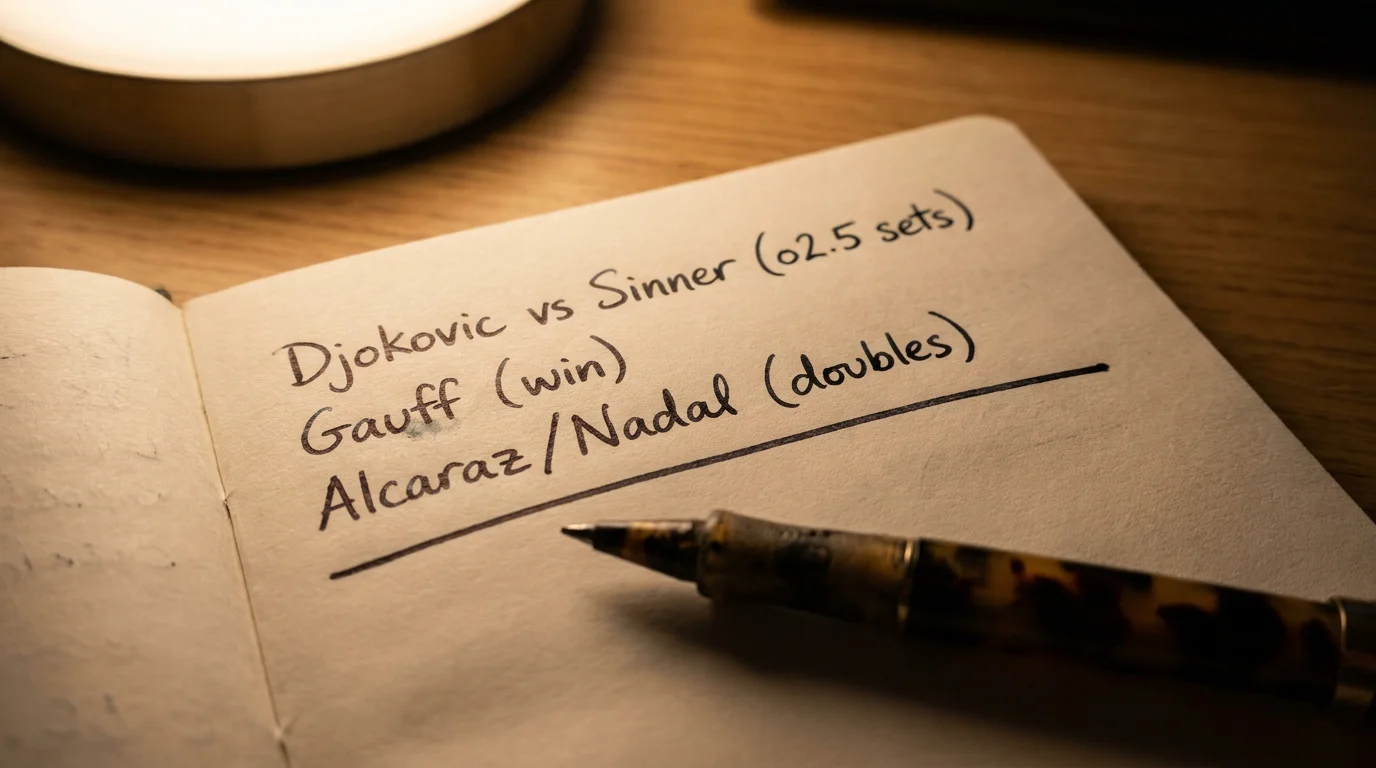
The second mistake is backing players because you’ve heard of them, not because the price is right. Beginners gravitate to famous names, the household stars, the players they’ve watched on television, and bet them almost regardless of odds. The bookmaker knows this perfectly well, and prices the popular names shorter than they should be precisely because recreational money floods onto them.

This connects directly to the favourite-longshot bias documented across tennis betting markets, but name bias is its own distinct trap. A famous player coming back from injury, on a bad surface, against a dangerous unknown, might be genuine value to oppose, yet the beginner backs them anyway because the name feels safe. You’re not betting on tennis at that point, you’re betting on familiarity, and familiarity is the most overpriced commodity on the board. The market has already inflated the star’s price to soak up exactly the money you’re about to add to the pile.
The cure is to read the price before you read the name, ideally to form a view on the match before you even notice who’s playing. What probability does this price imply, and do I think it’s too high or too low? Answer that on the numbers, and the famous name loses its grip on your judgement. The full discipline of judging a price against true probability, which is the antidote to every form of bias, sits in my colleague’s guide to finding value in tennis.

Chasing and tilt
The third mistake is the one that turns a bad day into a disaster: chasing losses. You’re down for the session, frustration builds, and you start placing bigger, looser bets to win it all back in one go. This is tilt, the emotional spiral every gambler knows, and it’s where small losses become the kind that genuinely hurt. The chase doesn’t recover your money; it accelerates the bleeding.

The maths is merciless. Doubling your stake to recover a loss doesn’t restore your edge, it just doubles your exposure to the same overround while your judgement is at its worst, clouded by emotion. Players make their poorest decisions when angry or desperate, and the bets placed in that state are almost always worse than the ones that caused the loss. Even in the matches themselves, the data shows points end differently under pressure, with first-serve points won and lost in patterns that shift with the situation, and the same psychological fragility that affects players on court affects punters watching them. You are not immune to pressure just because you’re holding a remote instead of a racket.
The defence is mechanical, because willpower fails exactly when you need it. Set a stop-loss for any session and walk away when you hit it, no exceptions, no “one more to get level.” Decide your stakes in advance and never increase them to recover, because a staking plan only protects you if you follow it on your worst day, not just your calm ones. The losses you take from sound bets are the cost of doing business. The losses you take from chasing are self-inflicted, and they’re the ones that empty bankrolls fastest. Master those three behaviours, betting selectively, pricing before names, and refusing to chase, and you’ll have fixed more of your results than any improvement in tennis knowledge could ever deliver.
Articles
Published by the AceEdge team.
