
Fatigue, Scheduling and Travel as Tennis Betting Angles
 Available in US
Loading...

The angle hiding in plain sight on the schedule
Some of my most profitable bets started not with watching tennis but with reading a schedule. A player drags through a three-hour epic that finishes near midnight, then gets handed an early start the next day against a fresh opponent who strolled through in straight sets. The market often prices the next match on rankings and form. I price it on the legs, and the legs are tired in a way the headline odds don’t capture.

Fatigue, scheduling and travel are the most underrated angles in tennis betting, precisely because they’re measurable yet routinely underpriced. As one betting editorial put it, “Tennis form can swing quickly due to fatigue, injury, or momentum shifts across tournaments,” and the punter who tracks the physical toll of a player’s week is reading a layer of information the casual market skims over. This isn’t mystical. It’s arithmetic about recovery, and recovery has limits no ranking can override.
Quantifying fatigue
Fatigue sounds vague until you anchor it to the one thing that decides tennis matches: holding serve. A tired player’s first serve drops in speed and accuracy, their movement to the ball slows by a fraction that matters at this level, and the rallies they can sustain shorten. Every one of those degrades their probability of holding, and a player who can’t hold reliably is a worse bet than yesterday’s price suggests, regardless of how good they looked when fresh.
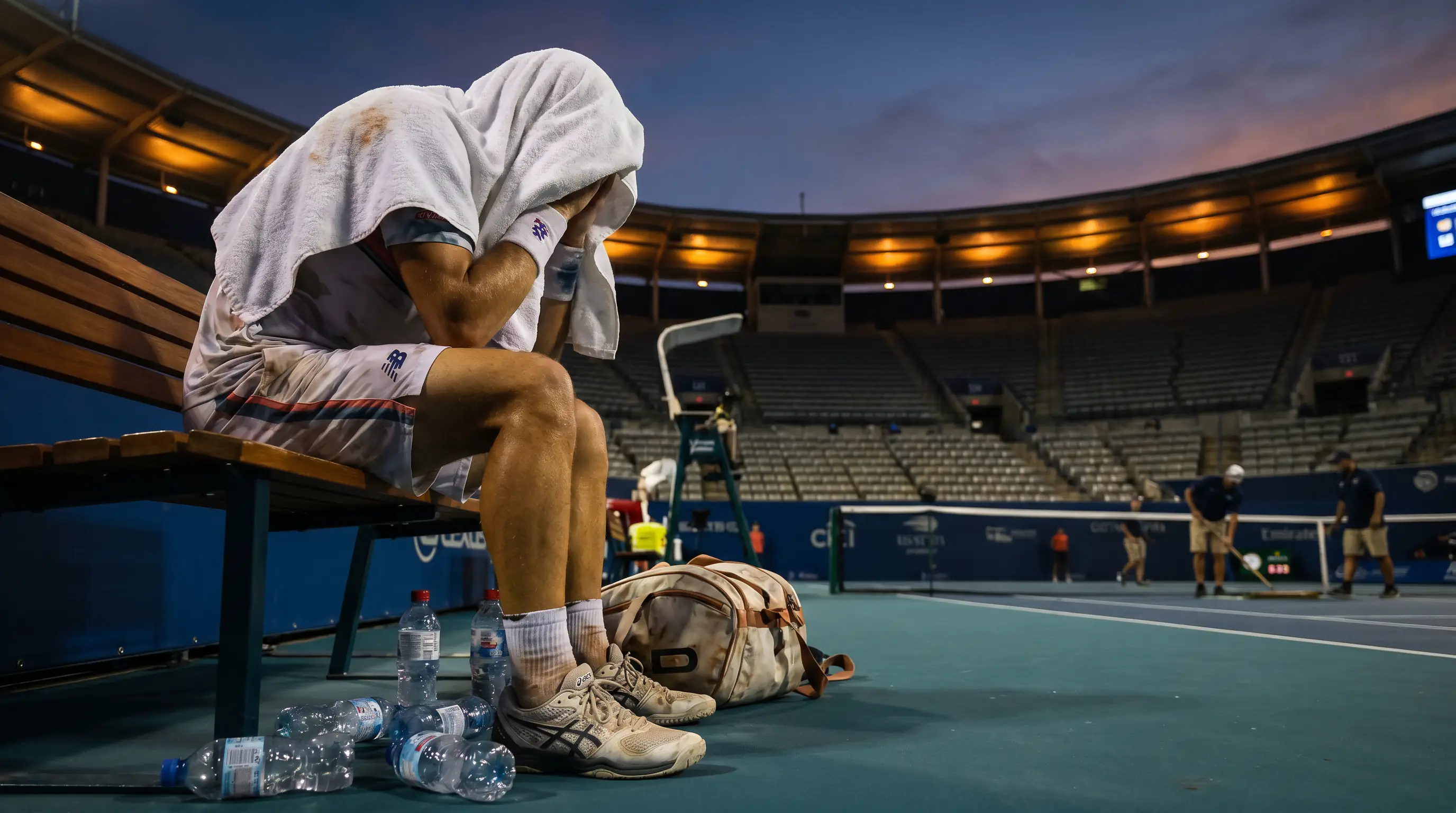
The clearest, most quantifiable fatigue signal is the previous match’s length and intensity. A long, physical three-setter, especially on a slow surface where points stretch out, drains far more than a routine straight-sets win. Surface matters enormously here because of how rallies play out: on clay, where a large share of first-serve points still ended in short rallies but second-serve exchanges dragged on, a grinding match leaves deeper fatigue than the same scoreline on a quick court where points end fast. I look at not just whether a player won, but how long they were out there and how hard they had to work, because a two-hour battle and a fifty-minute demolition leave very different bodies behind.
The trick is to compare the two players’ recent workloads side by side rather than judging one in isolation. A player coming off a tough three-setter isn’t automatically a fade; they’re a fade against a fresh opponent and a fair bet against someone equally drained. The angle is relative fatigue, the difference in tank between the two sides of the net, and that difference is what the market most often fails to price cleanly.

Scheduling and the turnaround trap
Turnaround time is where fatigue becomes a genuine edge, because the schedule creates situations the season-long form simply can’t reflect. The classic trap is the player who finished late in a night session and is scheduled early the next day. Their actual recovery window might be under eighteen hours, against an opponent who had a full day or finished early. The bodies walking on court are not equally prepared, and the price rarely reflects the gap.
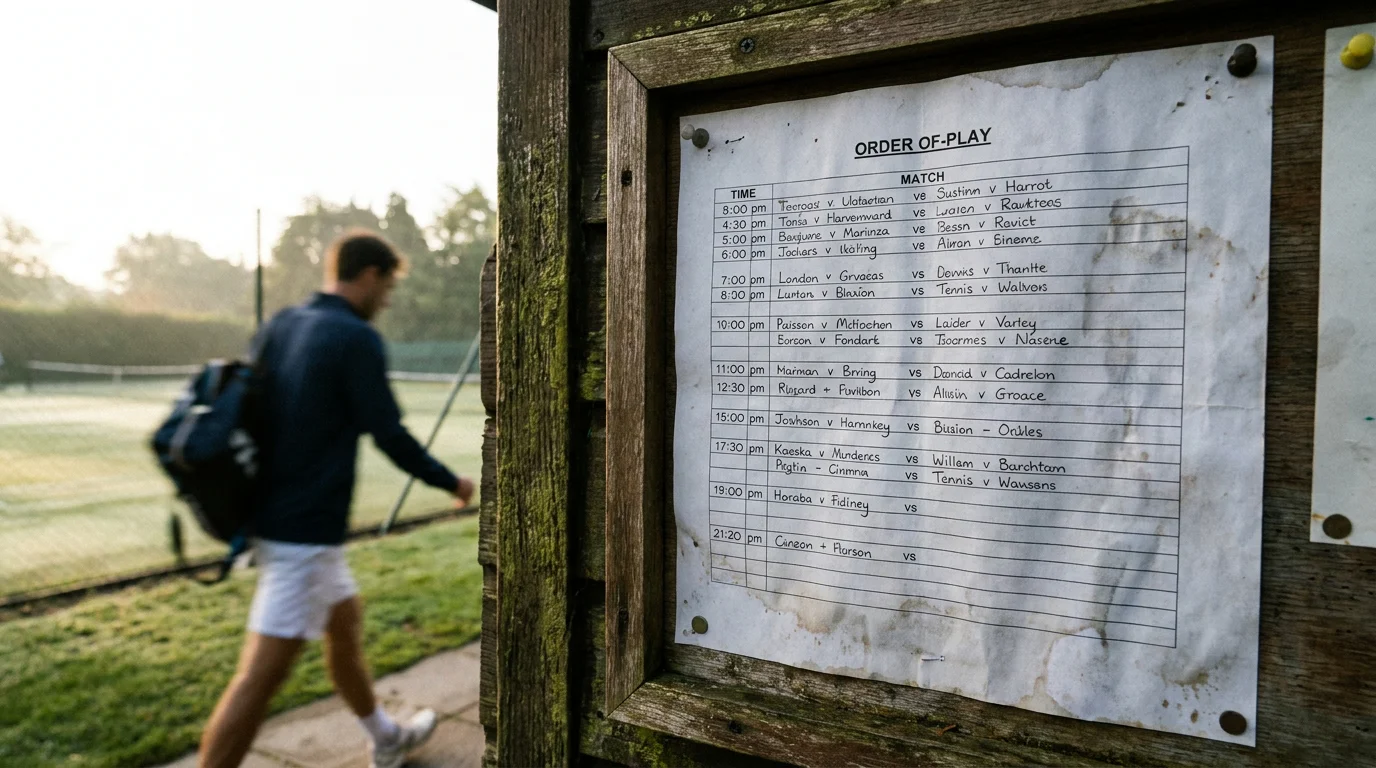
Tournament structure compounds this as events progress. Early rounds offer rest days; the back end of a tournament can mean playing on consecutive days, sometimes after long matches, with the physical debt accumulating round by round. A player who survived three deciding sets to reach the quarter-finals is carrying a load their quarter-final price may ignore, especially if their opponent took an easier route. I pay particular attention to deep runs by players not known for their fitness, because that’s where the accumulated debt finally comes due, often spectacularly, in a tank job nobody priced.
This is also where the value angle and the fatigue angle meet. A scheduling disadvantage isn’t just a reason to fade the tired player; it’s a reason to look for value on the fresh one, whose price may not reflect the gift the schedule just handed them. The mechanics of turning that read into a measurable edge over the displayed odds sit within the broader discipline of finding value in tennis, but the fatigue angle is one of the cleaner sources of that value because so few casual punters bother to check the schedule.
Travel, time zones and the body clock
Travel is the subtlest angle of the three, and the one I’m most cautious about overrating, but it’s real. Long-haul travel and significant time-zone changes disrupt sleep, recovery and timing, and a player who has just crossed several time zones to reach an event is not always operating at full capacity in the opening rounds. The body clock takes days to adjust, and the first match after a major journey is the one most likely to feature a sluggish, error-strewn performance.

The most exploitable version of this is the player arriving late from a distant event and thrown straight into early-round action with little time to acclimatise. Their ranking says one thing; their body clock says another. I look for these spots especially at the start of a new swing, when players have crossed continents to switch surfaces and conditions at the same time, stacking jet lag on top of an unfamiliar court. With tennis being the fastest-growing sport in online betting and its calendar spanning time zones to enable round-the-clock in-play action, these travel-driven mismatches occur constantly, yet the market consistently underweights them.
I’ll be honest about the limits, though, because discipline matters more than any single angle. Elite players travel with teams built to manage exactly these problems, and many have adapted to the grind over years of doing it. Travel fatigue is a tilt, not a certainty, and I treat it as a supporting factor that strengthens a bet I already like rather than a standalone reason to stake. Stack it with a tough previous match and a brutal turnaround, though, and you have a player the market is pricing on reputation while their body tells a different story, which is exactly the gap a patient punter is paid to find.
Articles
Published by the AceEdge team.
