
Tiebreaks, Final-Set Rules and How They Affect Tennis Bets
 Available in US
Loading...
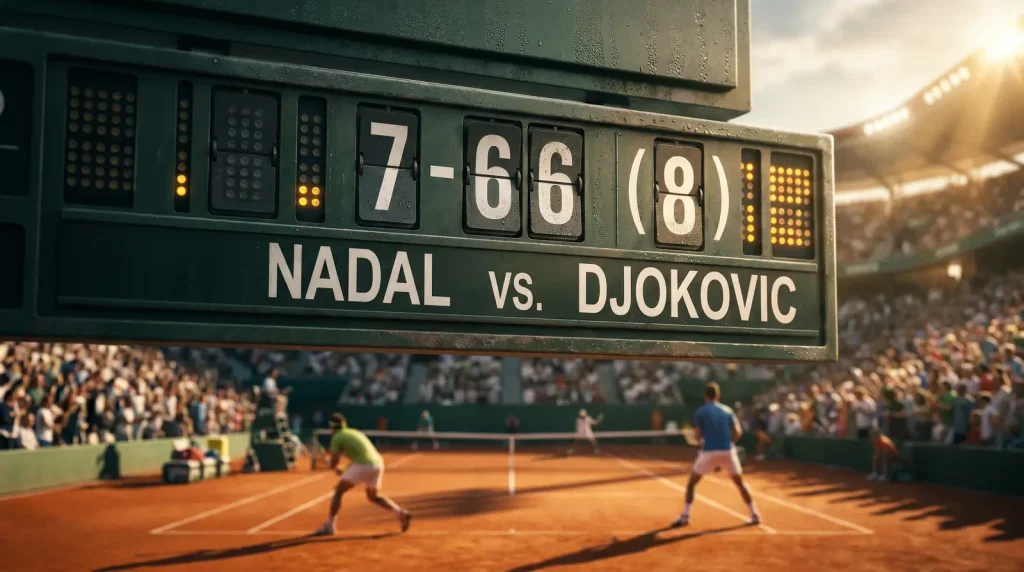
The rule change that quietly rewrote the totals market
For years, a deciding set could stretch to absurd lengths, with players trading holds deep into double figures because someone had to win by two games. Then the tours standardised final-set tiebreaks, and a whole category of marathon endings vanished overnight. Most punters barely registered the change. Anyone betting games totals or handicaps should have studied it closely, because the rules of how a set ends directly shape the distribution of outcomes you’re betting on.

Scoring rules aren’t trivia for the bettor; they’re the boundary conditions of every market that depends on games and sets. A ten-point deciding tiebreak caps how long a final set can run, which truncates the high end of the games total. An old-style advantage set, where play continues until someone leads by two, leaves that high end open and occasionally produces the marathons that blow a totals bet apart. If you don’t know which rule applies to the match in front of you, you’re pricing a market without knowing its limits.
Final-set formats across the tours
The first thing to understand is that final-set rules are no longer uniform, despite recent efforts to standardise them. For years the four Grand Slams each did their own thing in the deciding set, some with tiebreaks at different scorelines, some with advantage sets running indefinitely, which created genuine confusion and the occasional record-breaking marathon. The tours have since moved toward a common standard, with a ten-point tiebreak in the deciding set widely adopted, but you should never assume every event and every tour applies exactly the same rule.

This matters because the format determines the maximum and the shape of a final set. A ten-point deciding tiebreak means that once the final set reaches its tiebreak trigger, the set resolves quickly through a single first-to-ten breaker rather than dragging on through endless holds. That caps the games count and compresses the range of possible totals. An advantage final set, where it still exists, removes that cap and reintroduces the small but real chance of a marathon that sends the games total soaring far beyond the line.
My practical habit is to confirm the deciding-set rule before betting any games-dependent market, especially across different tournaments where the rules may diverge. It takes seconds and it changes the maths. Treating a ten-point-tiebreak event and a hypothetical advantage-set event as the same betting proposition is an error, because the tail risk on the totals market is fundamentally different between them, and that tail is exactly where games-total bets are won and lost.

The history here is genuinely useful context, not just trivia. The push to standardise deciding sets came partly from the spectacle of marathon matches that ran far beyond any reasonable schedule, exhausting players and overrunning broadcasts. Those marathons were thrilling to watch and brutal to bet, because a single match could shatter every assumption baked into a games total. Standardisation tamed that chaos, which is good for schedulers and broadcasters but also quietly removed a source of variance that sharp totals bettors once had to price. Knowing that the modern game has clipped its own tail tells you the over on a high line is a harder bet than it would have been a decade ago, and that the market has adjusted to a world with fewer marathons in it.
Impact on totals and handicaps
Here’s where the rules translate into money. The games total market is a bet on how many games the match contains, and the final-set format sets the ceiling on that number. With a ten-point deciding tiebreak, the maximum games in the final set is tightly constrained, which pulls in the upper tail of the totals distribution and makes very high games counts far less likely than they were in the advantage-set era. If you’re betting the over, the modern tiebreak rule is quietly working against the extreme outcomes you’d need.

This feeds directly into how I read a totals line. On a fast surface where breaks are rare, the match naturally trends toward more games and tiebreaks, but the ten-point deciding breaker then caps how far the final set can extend, creating a specific distribution the market prices in. Surface and rules interact: at the fastest events, where servers held close to 87.8% of games, you’d expect high games counts and frequent tiebreaks, but the deciding-set rule still puts a lid on the very top. Game handicaps are affected the same way, because the margin by which a match can be won is bounded differently depending on whether the final set can run long. The full mechanics of how these markets are graded sit in my colleague’s overview of how tennis betting markets work.
Tiebreak-specific markets
Beyond the indirect effect on totals, bookmakers offer markets specifically on tiebreaks, and the scoring rules shape their value directly. The most common is some version of “will there be a tiebreak in the match,” and whether that’s good value depends entirely on the surface, the players and the final-set format. On a fast court between two big servers, tiebreaks are likely, and the market often prices that likelihood fairly, leaving little edge. On a slow court between break-prone players, tiebreaks are rarer, and the market sometimes overprices their probability.
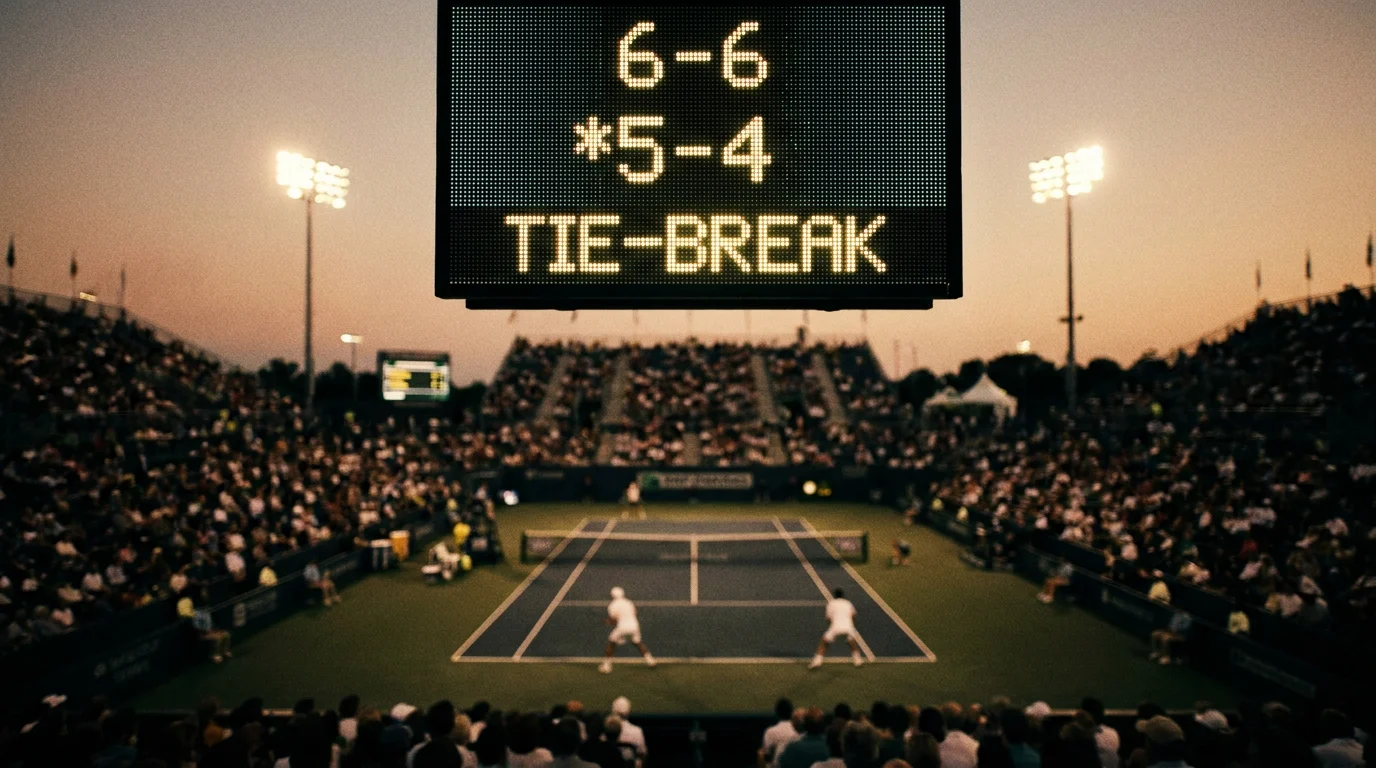
The deciding-set format adds a wrinkle to these markets too. A ten-point deciding tiebreak is itself a kind of tiebreak, so depending on how a “tiebreak in match” market is defined, the guaranteed-breaker nature of a long deciding set can affect settlement. At the fastest events, where holds are routine and matches hinge on a handful of points, tiebreaks are common enough that the market is usually efficient, but on surfaces and match-ups where they’re less certain, the rules and conditions can create genuine mispricing for a punter who reads them carefully.
So my closing point is that scoring rules deserve a place in your pre-bet checklist whenever you’re touching games totals, handicaps or tiebreak markets. Confirm the final-set format, factor in how it caps or extends the games distribution, and read the surface and players alongside it. The rules are the invisible framework every games-based market sits inside, and the punters who ignore them are pricing those markets blind. The ones who study them know exactly where the ceiling on a total sits, and that knowledge is a quiet, durable edge in markets most people bet on feel alone.
Articles
Published by the AceEdge team.
