
Using Head-to-Head and Form in Tennis Betting
 Available in US
Loading...

The stat everyone quotes and almost everyone misreads
“He’s beaten her three times out of four, that’s a lock.” I hear versions of this constantly, and it makes me wince every time, because a four-match head-to-head tells you almost nothing reliable. Head-to-head and form are the two statistics every punter reaches for first, and they’re also the two most routinely misused. Used well, they’re a genuine edge. Used the way most people use them, they’re a confident path to backing the wrong player.
The core problem is sample size and what the numbers actually represent. A handful of previous meetings, often spread across years, different surfaces and different stages of two careers, is far too small and too noisy to carry the weight punters put on it. What a head-to-head can occasionally reveal is a genuine stylistic match-up, one player’s game simply troubling another’s, and that’s the signal worth extracting. The raw record, the “three out of four,” is mostly noise dressed up as insight.
Why small head-to-head samples mislead
Let me put the maths bluntly, because it’s the heart of the matter. If two evenly matched players meet four times, the most likely single outcome is a 3-1 split purely by chance, with no skill gap at all. A 3-1 head-to-head between near-equals is exactly what randomness produces, yet punters read it as proof that one player “owns” the other. You’re seeing a coin that came up heads three times in four tosses and concluding the coin is bent.
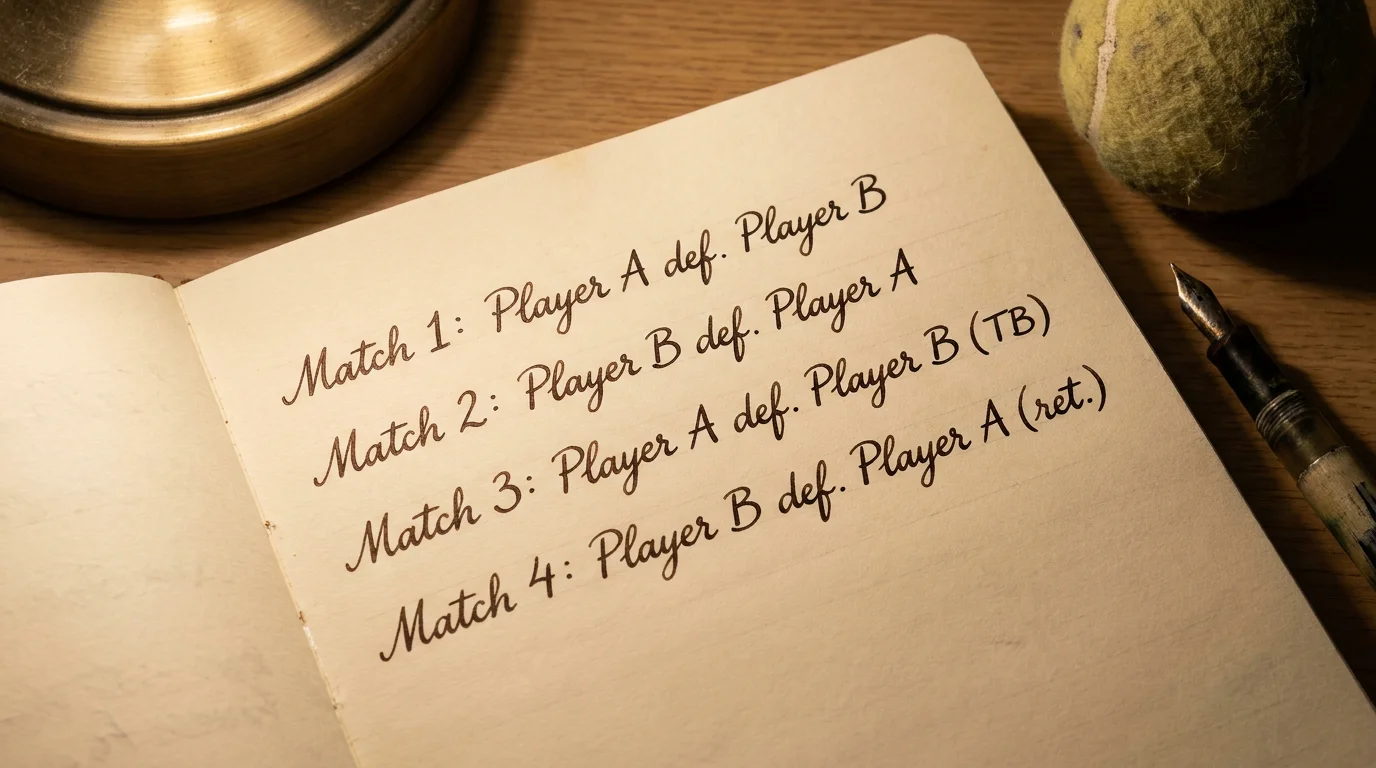
The problem compounds when the meetings are stale or scattered. A head-to-head built from matches two, three and four years ago describes two players who may no longer exist in any meaningful sense. Form changes, bodies change, techniques get rebuilt, confidence rises and collapses. A 2-0 lead in meetings from a player’s prime against an opponent’s slump tells you about a past that has no bearing on a match between their current selves. The record is real; its relevance has expired.
There’s a psychological trap layered on top of the statistical one. The human mind is built to find patterns, and a head-to-head record is a tidy little narrative that feels like knowledge, which is exactly what makes it dangerous. We latch onto “he always beats her” because it’s a story, and stories are stickier than the uncomfortable truth that four matches simply can’t settle anything. The market knows punters do this, and a popular but meaningless head-to-head can pull recreational money onto the wrong player, which occasionally leaves genuine value on the other side for anyone willing to ignore the seductive scoreline.

Surface scrambles it further, and this is where casual head-to-head reading falls apart completely. Two players might have met four times, but if three of those were on clay and today’s match is on a fast hard court, the record is describing a different contest than the one you’re betting. A clay-court result between a grinder and a server reverses on grass, where serving dominance takes over. Lumping all surfaces into one head-to-head number erases exactly the information that matters most, and the way surface reshapes any match-up is the whole subject of my piece on how court surface decides tennis bets.
Style match-ups over raw record
Here’s where head-to-head earns its keep, if you read it correctly: as evidence of a stylistic problem rather than a scoreline. Sometimes one player’s game genuinely troubles another’s in a way that transcends ranking. A heavy left-handed topspin forehand that pulls a one-handed backhand out of its comfort zone, a flat hard hitter who rushes a rhythm player, a relentless returner who neutralises a serve-reliant opponent. These match-up effects are real, persistent, and far more useful than the win-loss tally.

The numbers behind why styles clash are rooted in serve and return. First-serve effectiveness sits around 67.5% on hard courts and roughly 62.4% on clay for the men, and a player whose entire game leans on a dominant first serve can be systematically dismantled by an elite returner regardless of rankings, because the match-up attacks their core weapon. When you look at a head-to-head, the question isn’t “who won,” it’s “why,” and if the answer is a structural stylistic edge rather than a hot day or a fluke, then it’s information worth pricing.
So I read head-to-heads looking for mechanisms, not margins. If I can articulate exactly why one player troubles another, in terms of how their games interact, the record supports a real read. If all I can say is “he tends to win these,” I treat the number as the noise it almost certainly is. The difference between those two interpretations is the difference between using head-to-head as analysis and using it as superstition.
Weighting recent form
Form is head-to-head’s twin, and it suffers from the opposite error: punters either overweight it wildly or define “recent” so loosely it becomes meaningless. Form genuinely matters, because tennis is a confidence and rhythm sport where a player on a hot streak really is playing better than their ranking, but only a narrow, recent and relevant slice of it carries signal. The rest is noise you should discard.

The relevant window is short and surface-specific. A player who has won ten straight on clay tells you little about their prospects in the first week of the grass season, when the surface resets which strengths matter. Only one man in the Open Era has posted career win rates above 80% on all three surfaces at once, which underlines how rare true all-surface form is and how much most players’ form is tied to conditions that suit them. When I assess form, I weight the last few weeks heavily, prioritise results on the current surface, and largely ignore anything older than a couple of months as describing a player who may have moved on.
The synthesis is to treat both statistics as supporting evidence, never as a verdict. A relevant, recent, surface-appropriate head-to-head that reveals a stylistic edge, combined with current form on the surface in question, is a genuine input to a price. A stale four-match record and a vague sense that someone’s “playing well” is a story you’re telling yourself. Read both for mechanisms and recency, discard the noise ruthlessly, and you’ll use the two most popular tennis statistics the way the few profitable punters do, as a scalpel rather than a comfort blanket.
Articles
Created by the "AceEdge" editorial team.
