
Tennis Bet Builders and Same-Game Multiples
 Available in US
Loading...

The product built to feel like value
The bet builder is the slickest betting product of the last few years, and that slickness is precisely what should make you cautious. You pick several things to happen in a single match, your player to win, the match to pass a certain number of games, a particular set scoreline, and the app instantly bundles them into one tempting price. It feels like you’re constructing a clever, personalised bet. What you’re actually doing, most of the time, is handing the bookmaker a carefully priced advantage dressed up as customisation.
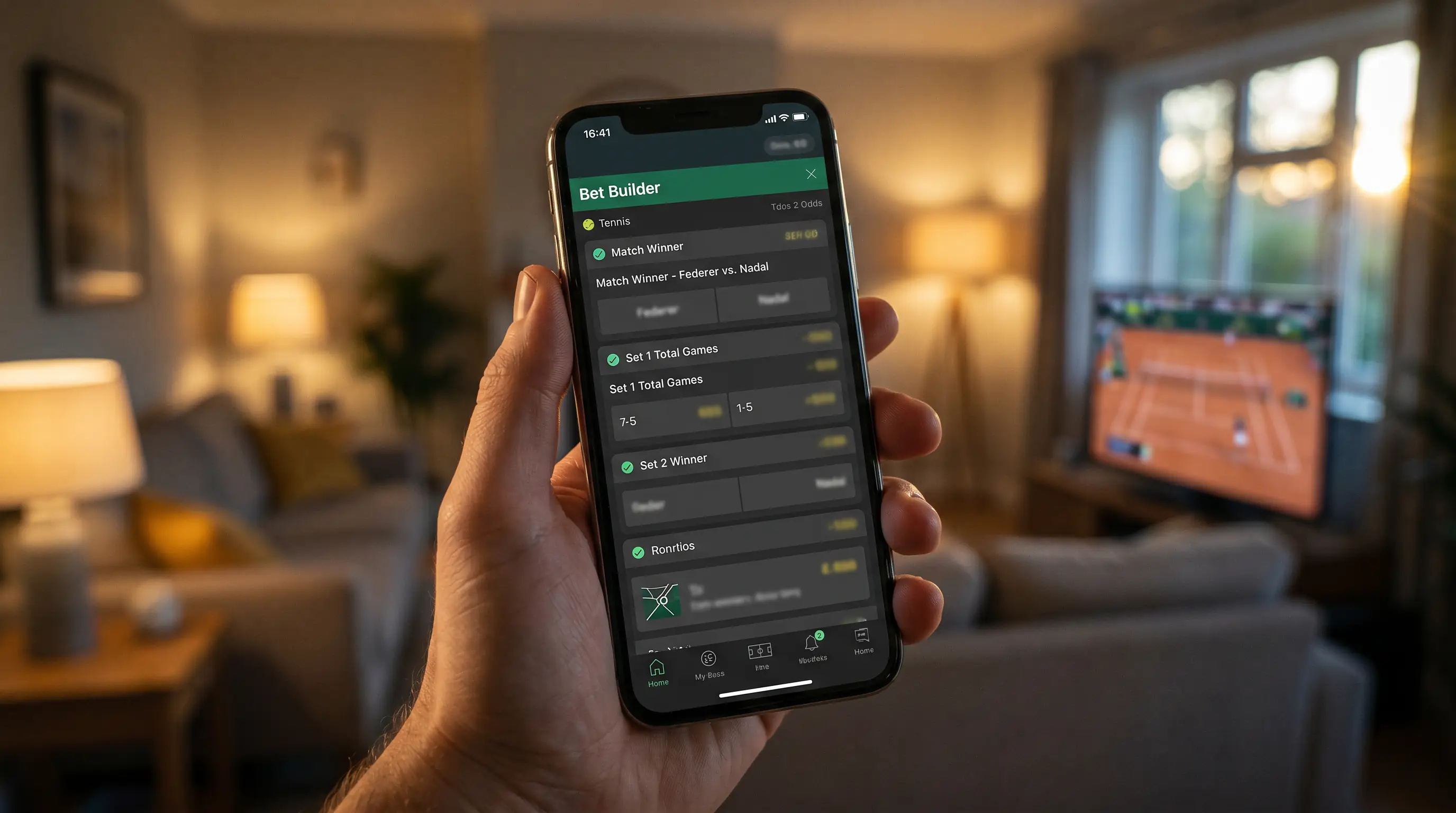
The rise of the bet builder is part of a broader shift in betting. As one industry research executive observed, the revenue pie has been reshaped and is increasingly driven by new online gaming options available to more people than ever before, and the same-game multiple is one of those options. It exists because it’s profitable for operators and engaging for customers, a combination that should always prompt a value-conscious punter to ask exactly how the profit is being made. The answer, almost always, is correlation.
How correlated legs are priced
The entire bet builder hinges on a concept most punters never consider: correlation between the legs. When you combine outcomes from a single match, those outcomes are rarely independent, and the bookmaker prices the relationship between them with great care, always in their own favour. This is the fundamental difference between a same-game multiple and a traditional accumulator built from separate matches, where the legs genuinely are independent.

Consider the classic combination of backing a player to win and the match to go over a certain games total. These two outcomes are linked: if your player wins easily in straight sets, the match is short and the over is less likely; if it’s a tight, drawn-out battle, the over is more likely but your player’s win is less certain. The two legs pull against each other, and a fair price would account for that tension. The bookmaker does account for it, then adds their margin on top of the correlation-adjusted price, which is why these combinations rarely offer the value the headline odds suggest. In a betting industry this vast, with online turnover alone measured in the tens of billions of pounds, same-game products are a deliberately engineered, high-margin growth area precisely because this correlation pricing is so profitable.
The trap is that the legs feel like they reinforce each other when they actually conflict. A punter thinks “my player will win, and it’ll be a long match, so I’ll combine them,” not realising those two beliefs are in mild contradiction and that the bookmaker has priced the contradiction to their advantage. Understanding which combinations are correlated, and in which direction, is the only defence, and it’s the difference between using a bet builder thoughtfully and feeding it blindly.

Which combinations make sense
Not every bet builder is a trap, and there are combinations where the logic genuinely works, if you understand the correlation rather than ignore it. The useful cases are ones where the legs are positively correlated in a way the bookmaker hasn’t fully priced, or where you have a specific, coherent read of how a match will unfold that the combined price underrates.
Suppose you strongly believe a heavy-serving favourite will win on a fast court, and that the match will feature few breaks and therefore tiebreaks. Backing the player to win and the match to feature a tiebreak is a coherent, positively linked read: the same fast conditions that favour your server also make tiebreaks more likely. At the fastest events, servers held close to 87.8% of their service games, so a tiebreak-heavy match is a reasonable expectation, and a combination built on that genuine causal link is more defensible than a contradictory one. The skill is choosing legs that genuinely point the same way for the same underlying reason, surface and serve in this example, rather than legs that merely feel compatible.

Even then, you’re paying the bookmaker’s margin on a product designed to maximise it, so the bar for a sensible bet builder is high. I use them sparingly and only when I can articulate the precise causal story linking the legs, why this match’s conditions make all my chosen outcomes more likely together. If I can’t tell that story cleanly, the combination is either contradictory or coincidental, and in both cases the bookmaker’s correlation pricing is working against me.
Bet builders versus straight bets
Step back and the comparison with simple straight bets is sobering. Every leg you add to a bet builder multiplies the bookmaker’s margin and layers in correlation pricing, so the more elaborate your same-game multiple, the worse your expected value tends to be relative to betting the individual angles separately. If you genuinely believe two independent-ish things about a match, you often get better value backing them as separate bets than bundling them into one correlated slip.

The exception is the entertainment calculation, which I’d never dismiss. A bet builder turns a single match into a richer watching experience, and a small stake on a fun combination is a perfectly reasonable purchase of enjoyment, as long as you call it that and don’t mistake it for a value play. The danger is only when punters convince themselves the bet builder is a sophisticated strategy rather than a high-margin entertainment product, and stake serious money on contradictory legs believing they’ve outsmarted the book. The same logic governs traditional multiples too, and I lay out the full maths of how margins compound across legs in my piece on tennis accumulators.
So my position on bet builders is consistent and unromantic. Use them rarely, only with legs you can link through a genuine causal story, and with full awareness that you’re paying a premium margin for the convenience and the correlation. For everything else, separate straight bets at keener prices will serve your bankroll better. The bet builder is a brilliant product, brilliantly designed to feel like value while delivering the opposite, and the punter who sees through the slickness is the one who keeps their money.
Articles
Created by the "AceEdge" editorial team.
