
How to Read Tennis Odds: Decimal, Fractional and Implied Probability
 Available in US
Loading...

An odd is a probability in disguise
For years I read odds the way most people do, as a measure of how much I’d win. Back this player at 2.50, get two and a half times my stake, simple. Then a sharper bettor reframed it for me in a single sentence that I’ve never forgotten: an odd isn’t a payout, it’s a probability with the bookmaker’s margin wrapped around it. Once you read odds that way, you stop asking “how much can I win” and start asking “is this price fair,” which is the only question that matters.

Every price on the board is the bookmaker’s estimate of how likely something is, converted into a number and then nudged in their favour. Learning to read that number, in whichever format it’s shown, and to translate it back into a probability is the foundational skill of betting with any edge. It’s the step before value, before expected value, before everything. You can’t judge whether a price is too high if you can’t see the probability hiding inside it.
Decimal versus fractional
UK punters meet two formats constantly, and switching between them fluently is the first practical skill to nail. Decimal odds are the simpler of the two and increasingly the standard. A decimal price tells you your total return per unit staked, including your stake back. Back a player at 2.50 and a one-pound stake returns 2.50 in total: your pound back plus 1.50 profit. The higher the decimal, the longer the odds and the less likely the outcome.
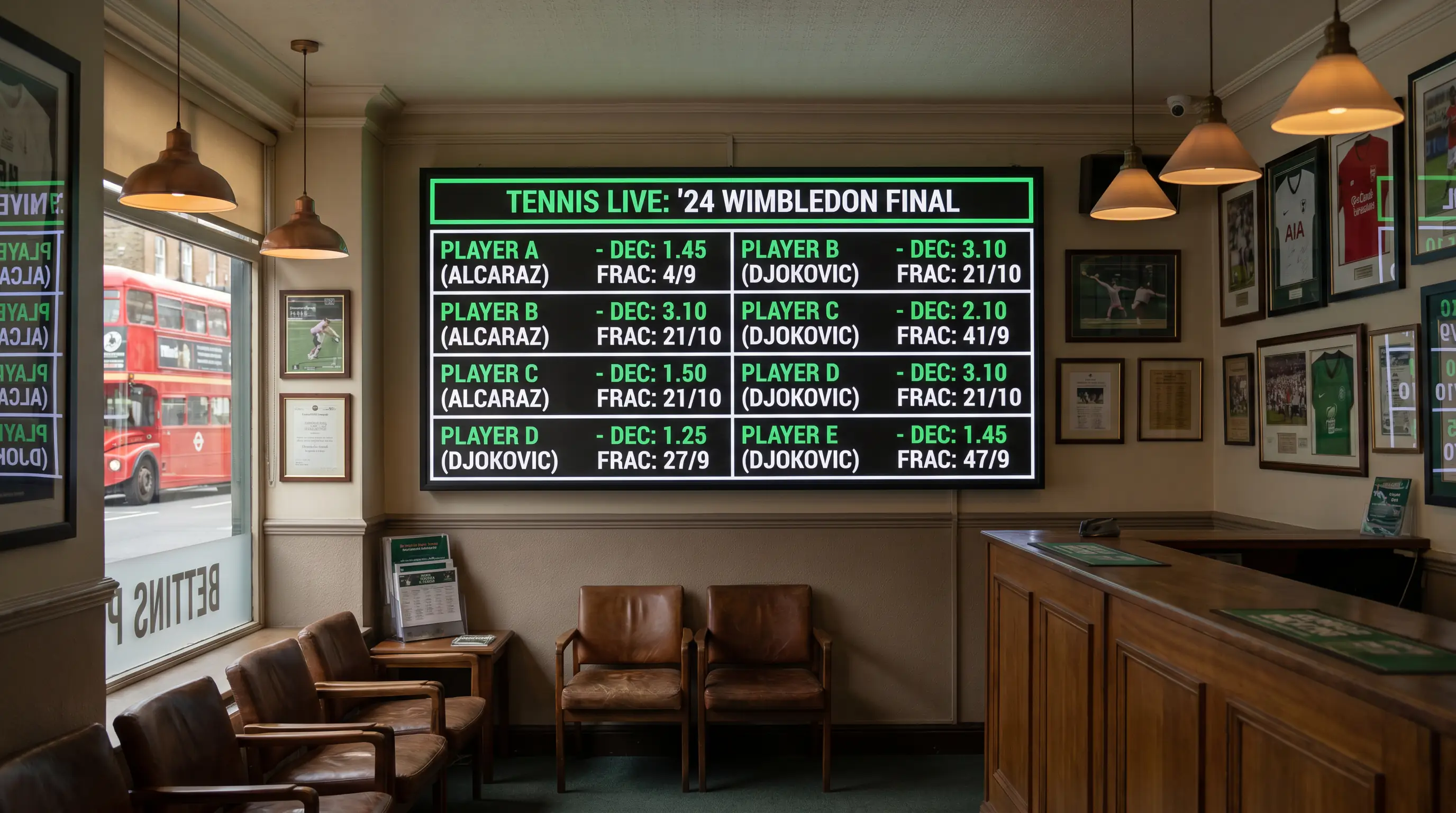
Fractional odds are the traditional British format you’ll still see everywhere, and they express profit relative to stake rather than total return. A price of 6/4 means you win six for every four staked, so a four-pound bet returns the four-pound stake plus six profit. The key difference is that fractional odds exclude your stake from the number, while decimal odds include it, which is exactly the trap that trips people converting between them. To turn fractional into decimal, divide the fraction and add one: 6/4 is 1.5, plus one gives 2.50, the same price in the other language.
I prefer decimal for one blunt reason: it makes comparison and probability conversion almost effortless, whereas fractional forces an extra mental step every time. When you’re scanning multiple prices for value, the format that lets you think fastest is the one that protects you from errors, and decimal wins that race. Most UK exchanges and many bookmakers now default to decimal precisely because it’s cleaner for the maths that actually decides whether a bet is worth placing.
Converting to implied probability
This is the conversion that turns a price into information, and it’s gloriously simple in decimal. To get the implied probability of any decimal odd, divide one by the odds and multiply by a hundred. A price of 2.50 gives one divided by 2.50, which is 0.40, or a 40% implied probability. The bookmaker is telling you they reckon this outcome happens roughly forty times in a hundred. A price of 1.50 implies about 67%, and a longshot at 11.0 implies about 9%.

That single calculation is the heart of reading odds, because it converts the bookmaker’s opinion into a number you can argue with. Once you can see that 2.50 means 40%, you can ask the only question that matters: do I think this player wins more often than 40% of the time? If yes, the price might be value. If no, it isn’t, however tempting the payout looks. This is the doorway to everything that follows, and the full method of comparing your estimate against the price to find an edge sits in my colleague’s guide to finding value in tennis.
Build the habit of converting prices on sight. After a while you’ll glance at 1.80 and think “56%” automatically, at 3.40 and think “29%,” and the odds will stop being abstract payouts and start being claims about reality that you’re free to accept or reject. That instinct, reading the probability before the payout, is what separates a punter who bets on prices from one who bets on numbers they’ve actually examined.

Reading the margin
Here’s the detail that explains why your conversions never quite behave, and why the bookmaker always wins in the long run regardless of who’s right on any given match. Add up the implied probabilities of both players in a tennis match and you’ll find they total more than 100%. That excess is the overround, the bookmaker’s built-in margin, and it’s the reason the prices are slightly worse than the true probabilities they’re meant to represent.
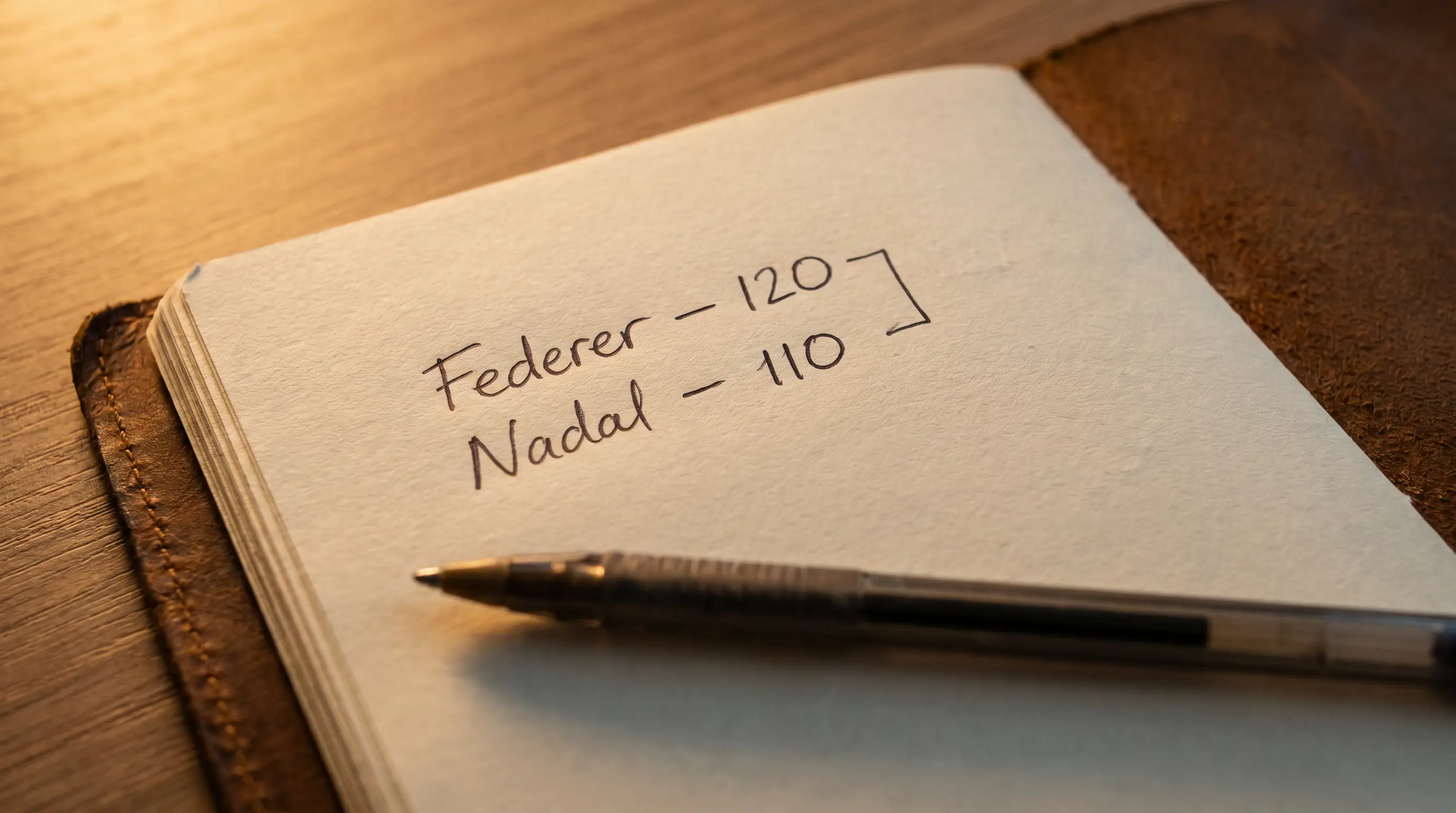
Work through it. If one player is priced at 1.80 and the other at 2.10, the implied probabilities are about 56% and 48%, which sum to roughly 104%. Those four percentage points over a true 100% are the bookmaker’s edge, the cushion that guarantees them a profit across a balanced book no matter the result. With the global sports betting market now running into the hundreds of billions of pounds, that small per-market margin compounds into vast operator revenue, which is exactly why understanding it matters to you. The tighter the overround, the better the value on offer, and comparing the total implied percentage across bookmakers is a quick way to spot which one is taking the smallest cut.
So when you read a price, read past the headline to the margin behind it. A two-way market summing to 102% is keener than one summing to 107%, and on the busier tennis matches, where competition forces tight margins, you’ll find prices much closer to true than on a thin lower-tour match where the overround balloons. Strip the margin out in your head, recover the true probability the bookmaker is hiding, and you’ll finally be reading odds the way they’re meant to be read: as probabilities in disguise, with the house’s cut showing if you know where to look.
Articles
Prepared by the AceEdge editorial staff.
