
What Does +1.5 Sets Mean in Tennis Betting?
 Available in US
Loading...

The insurance bet hiding inside the handicap market
A reader once messaged me, furious, because his player had lost a match yet his slip still came in green. He thought the bookmaker had made an error. It hadn’t. He’d backed +1.5 sets without quite knowing what he’d bought, and that confusion is the most common thing I untangle when people ask me about the set handicap.
Here is the whole thing in one line. A +1.5 set handicap on a best-of-three match means your player only needs to win a single set for the bet to settle as a winner. They can lose the match 2-1 and you still collect. The only way a +1.5 backer loses is a straight-sets defeat, 2-0. That is why I describe it as an insurance bet rather than a winner bet, and why the price behaves so differently from the moneyline you might be used to.
The handicap simply adds a set and a half to your player’s final tally before settlement. If your player takes one set, their adjusted score becomes 1 plus 1.5, which clears the opponent’s 2. Lose 2-0 and the adjusted 0 plus 1.5 falls short. Decimals never produce a tie, which is the elegant part of using a half-set line: there is no dead heat, no void, no push to argue about. You either covered or you didn’t, and the maths is settled the moment the second set ends or the third begins.
How the +1.5 line actually settles
I keep a notebook of the matches where this market saved or sank me, and the pattern is always the same: the result of a +1.5 bet is decided by sets won, never by games, points or who lifted the trophy. So let me walk through the scenarios cleanly, because the edge here lives in understanding settlement before you understand price.
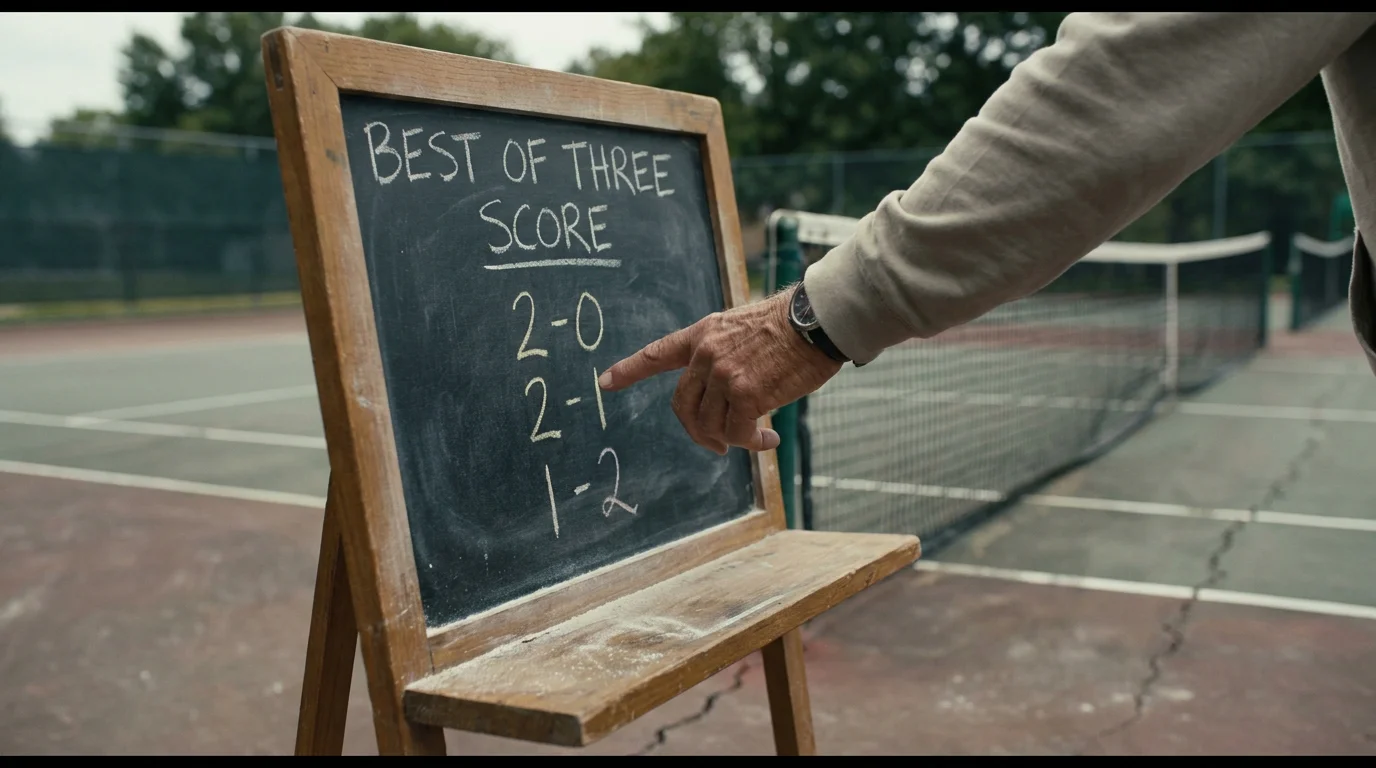
In a best-of-three contest there are exactly three possible scorelines: 2-0, 2-1 and 1-2 from your player’s point of view. Back your player at +1.5 sets and two of those three outcomes pay out. They win 2-0, you win. They win 2-1, you win. They lose 2-1, you still win because they grabbed a set. Only the 2-0 loss costs you. Compare that to the match-winner market, where two of those same three scorelines lose, and you can see why the handicap shortens the price so dramatically on a strong player.
The reason the favourite-longshot bias matters here is that the market consistently overprices unlikely outcomes and shaves value off the obvious ones, a tendency documented across tennis betting markets for the best part of two decades. When you back +1.5 on a heavy favourite, you are buying the most probable side of an already probable event, and the bookmaker’s margin bites hardest precisely where the public piles in. The insurance you are buying is cheap to the bookmaker and therefore expensive to you.
One technical note worth carrying with you. Surface changes how often the underdog steals a set, and that feeds straight into +1.5 value. On a fast hard court, where servers held around 87.8% of their service games at the quickest indoor events on tour, a single break can decide an entire set, which means even a weaker player can nick one set off a favourite on serve alone. The half-set line is more attractive on serving surfaces for exactly that reason.

A worked example from a best-of-three match
Numbers make this concrete, so here is a clean, brand-free example I use when coaching newer punters. Imagine a women’s tour match where the favourite is priced at 1.30 to win outright. The same favourite at -1.5 sets, meaning you need her to win 2-0, might sit around 1.95. Her opponent at +1.5 sets, needing just one set, could be 1.55 or shorter.
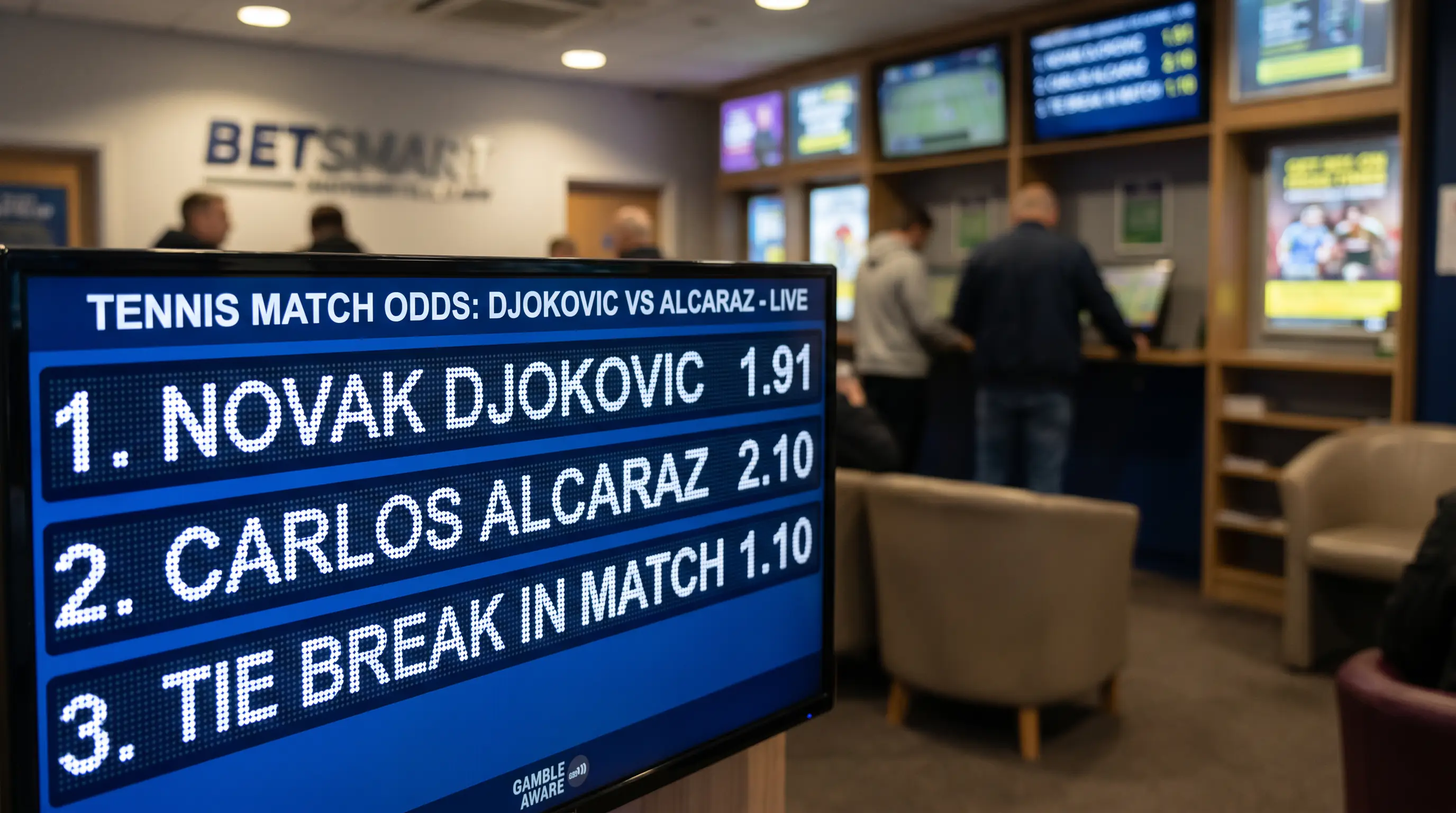
Watch what the prices are telling you. The outright 1.30 implies roughly a 77% chance of winning the match. The -1.5 line at 1.95 implies about 51% for a straight-sets victory, so the market reckons she takes the first set then either cruises or stumbles into a decider almost half the time. The +1.5 on the underdog at 1.55 implies around 65%, which is the market saying the underdog will likely win at least one set even while losing the war.
If you fancy the favourite but fear a sloppy opening set, -1.5 is the aggressive play and the outright is the safe one. If you like the underdog’s serve but not their stamina over three sets, +1.5 lets you back competitiveness without backing victory. That distinction is the entire point of the market: you are betting on the shape of the match, not just the name at the top of the scoreboard.
The mistake I see repeatedly is treating +1.5 on a short favourite as free money. At odds of 1.10 or shorter the insurance has almost no premium left, you are risking ten to make one, and a single 2-0 shock wipes out a long run of wins. The handicap is a tool for shaping risk, not a shortcut to guaranteed returns, and anyone selling it as the latter is selling you the bookmaker’s margin. If you want the broader map of how this market sits alongside totals and game handicaps, my colleague’s piece on how tennis betting markets fit together lays out the full landscape.

When the insurance is genuinely worth paying for
The honest answer is: rarely on the favourite, occasionally on the underdog, and almost never blind. I treat +1.5 as a value play in two situations. First, when I rate an underdog’s serve highly enough to expect at least one set, but doubt their ability to close out a match, the +1.5 price often lags behind that reality because the public anchors to the match-winner market. Second, when a favourite is a notoriously slow starter, backing their opponent at +1.5 can be a quiet way to profit from a likely set drop that the headline odds ignore.
Surface and format do the heavy lifting in that judgement. On clay, where rallies extend and breaks of serve come more freely, sets are harder for an outclassed player to hold, so the underdog +1.5 is less reliable than the price suggests. On grass or fast indoor courts, a big server can hold their way to a tiebreak and steal a set on a single mini-break, which is exactly the scenario +1.5 backers want. Read the surface before you read the odds.

Articles
Published by the AceEdge team.
