
Weather, Rain Delays and Roof Closures as Tennis Betting Angles
 Available in US
Loading...
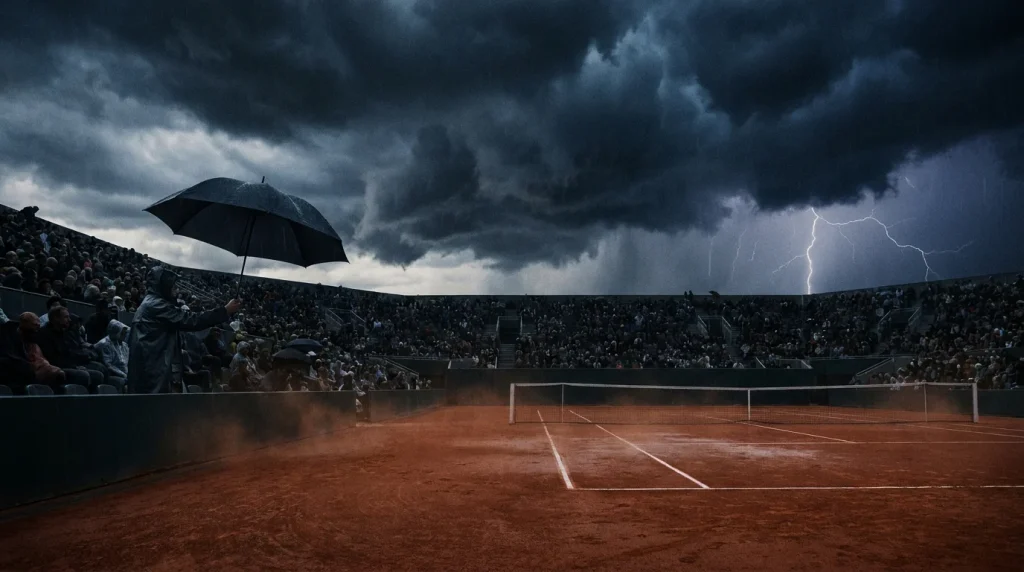
The delay everyone treats as dead time
When the rain comes and the covers go on, most punters sigh and go to make a cup of tea. I sit forward, because a rain delay is one of the most underrated betting events in tennis. A stoppage isn’t dead time; it’s a reset button that wipes out momentum, changes the conditions, and occasionally transforms an outdoor match into an indoor one. The market often treats the interruption as a pause. The sharp punter treats it as new information.
Weather and stoppages do three distinct things that move prices, and recognising them is the whole angle. They reset psychological momentum, handing the player who was struggling a chance to regroup. They change physical conditions, with a closed roof or a cooler, damper air altering how the court plays. And they create chaotic live-pricing moments where the bookmaker, like everyone else, is suddenly uncertain. Each of those is an opportunity if you’ve thought about it in advance rather than reaching for the kettle.
Momentum reset after a delay
The most reliable effect of a stoppage is the way it interrupts momentum, and momentum in tennis is a fragile, streaky thing. A player riding a wave, having just broken serve and seized control, is in a psychological state that a long delay can shatter. They come back off the break having lost their rhythm, their focus, the very flow that was carrying them, while their flagging opponent has had time to reset, regroup and start fresh. The delay doesn’t care who was winning; it resets both players, which disproportionately helps the one who was losing.
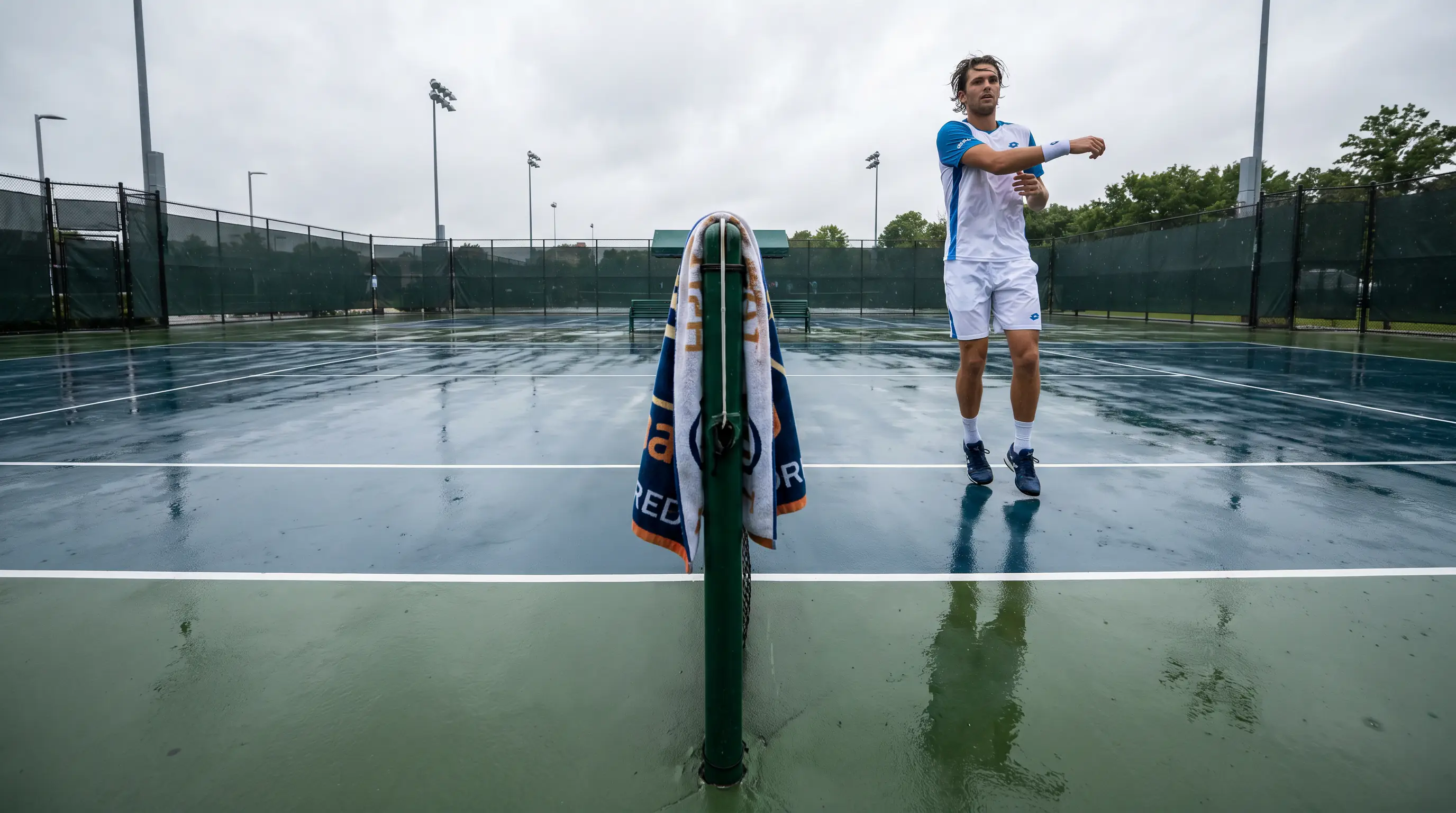
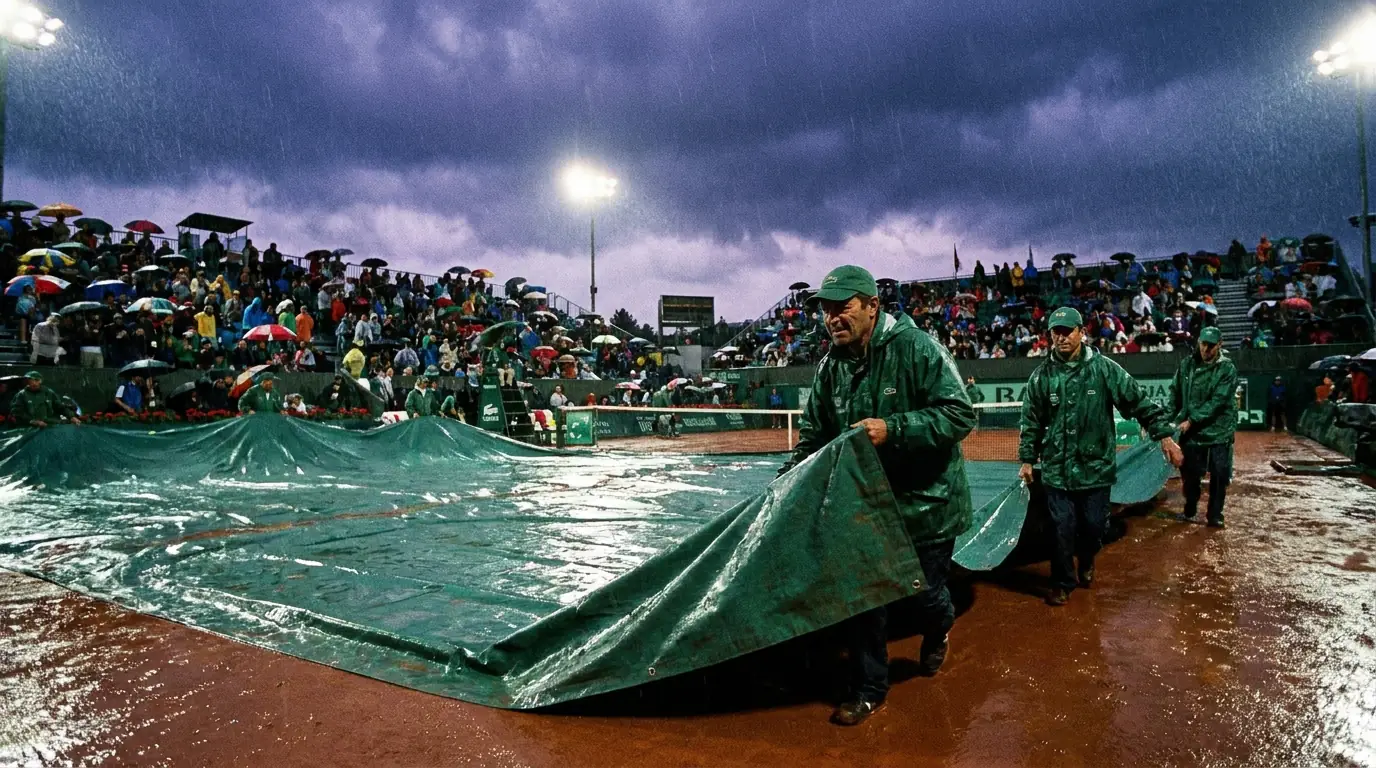
This creates a genuine angle when a match is suspended mid-surge. If a player has clawed back from a poor start and built momentum, only for rain to halt play, the resumption often sees that momentum evaporate. The market, pricing off the scoreline and recent run of play, may have the surging player too short, while the player who was on the ropes is now refreshed and the true probabilities have shifted back toward them. I look hard at who benefits from a reset, and it’s usually the player the recent scoreline flatters least.
The caveat is that this is a tendency, not a law, and some players are mentally robust enough to resume exactly where they left off. But as a default read, a long delay favours the player who needed it, and fades the one whose momentum it interrupted. When the live price hasn’t adjusted for that, because it’s anchored to the pre-delay run of play, there’s value in backing the refreshed underdog to come back a different proposition than the one who left the court.
When a closed roof becomes indoor tennis
This is the effect that genuinely changes the tennis, not just the psychology. When rain forces a roof to close, an outdoor match becomes an indoor one in an instant, and indoor tennis plays meaningfully faster. No wind, no sun, no weather variability, just still air and a quicker, more predictable surface that rewards the server. A match that began as an outdoor grind can become an indoor serving contest the moment the roof slides shut, and that shift favours a specific kind of player.
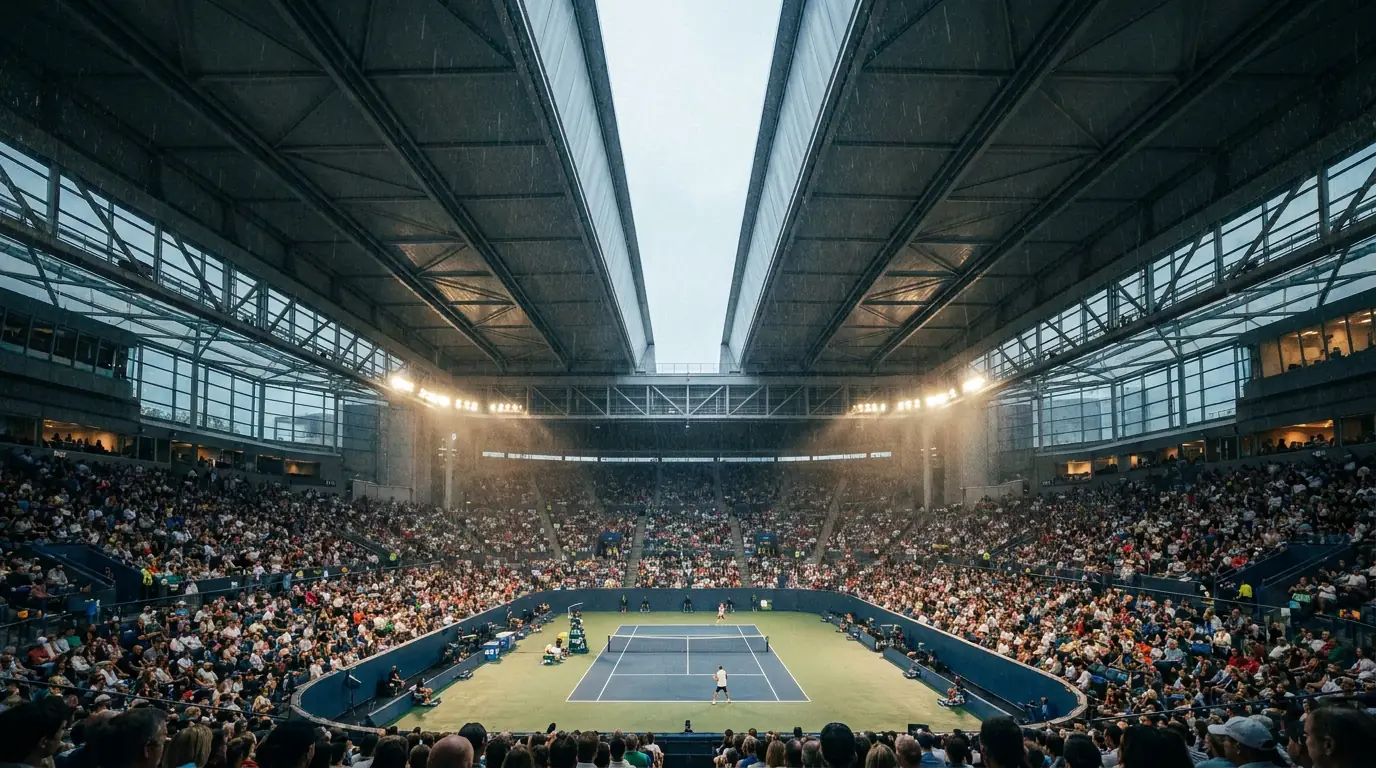
The numbers behind this are clear: first-serve effectiveness and hold rates climb indoors because the serve becomes a more reliable weapon without the elements interfering, and the same surface-ordering logic that puts hard courts above clay applies to the still, fast indoor environment. So when a roof closes, I immediately reassess in favour of the bigger server. The player whose game leans on serve has just had their best weapon sharpened, while the grinder who relied on wind and awkward conditions to disrupt them has lost an ally. The full mechanics of how indoor conditions and court speed reshape a match sit in my piece on court speed and conditions in tennis betting.
This is especially potent at events with retractable roofs, where a closure can happen mid-match and the conditions flip with little warning. The market doesn’t always reprice the surface change cleanly in the moment, particularly if the closure happens during a live suspension, which leaves a window for a punter who instantly recognises that the match has effectively moved indoors and become a faster, more serve-dominated affair.

Live pricing around stoppages
The chaos of a suspension is itself an opportunity, because uncertainty disrupts the bookmaker as much as the punter. When play stops, in-play markets typically suspend, and when they reopen, the prices reflect a new and uncertain situation. With in-play wagering now the majority of the online betting market, these suspension-and-resumption moments are frequent, and they’re among the few times the live price is genuinely unsettled rather than sharply calibrated.
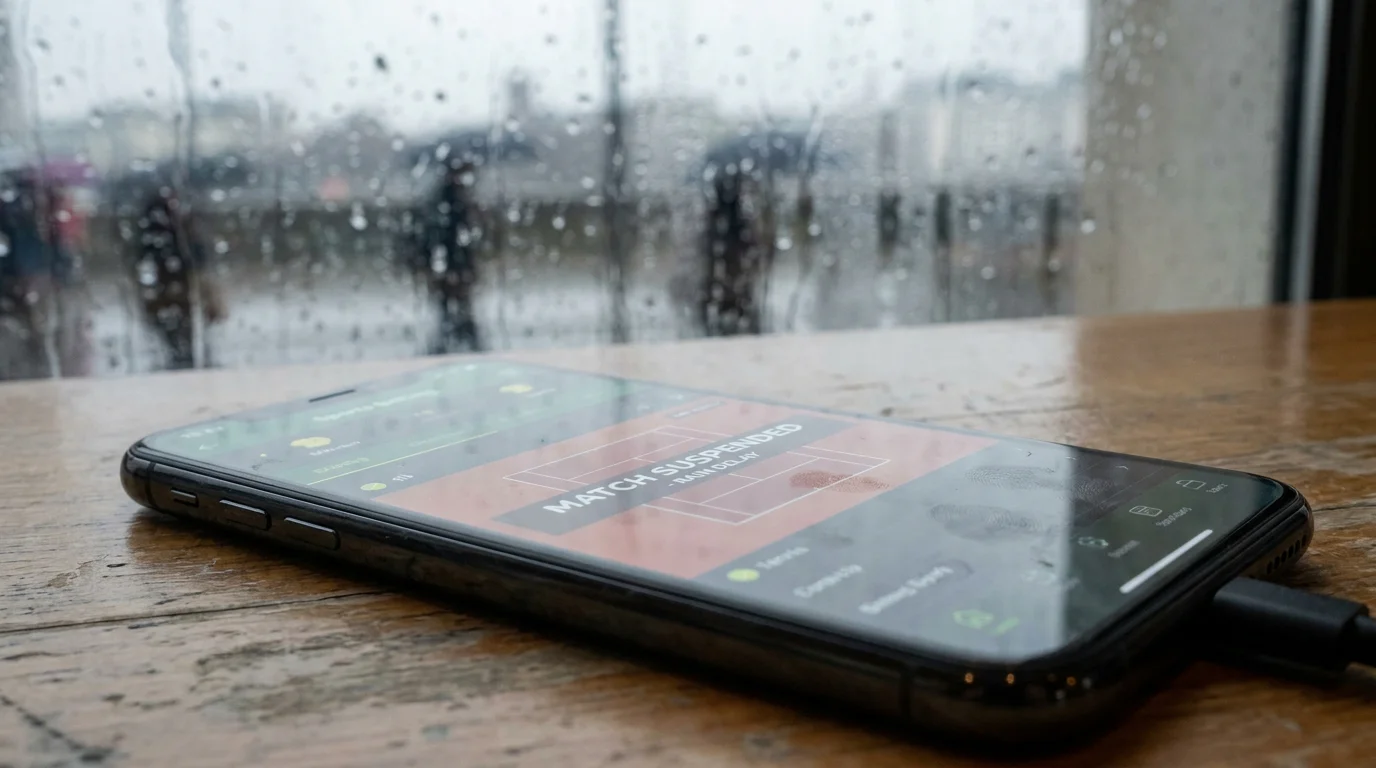
The practical play is to do your thinking during the delay, while the market is frozen, so you’re ready to act the instant it reopens. Decide in advance how the stoppage has changed the match: who benefits from the momentum reset, whether a roof closure has sped the court, and therefore which way the true probability has moved. When the market comes back, you can compare its reopened price against the read you’ve already formed, rather than scrambling to react in real time alongside everyone else. The punter who has already decided what the resumption means holds an edge over the one forming a view on the fly.
So treat weather as information, never as interruption. A rain delay resets momentum in favour of the struggling player, a closed roof speeds the court in favour of the server, and the suspension itself creates a window where the live price is briefly unsure of itself. None of these guarantees a winning bet, but each is a genuine shift in the true probabilities that the market doesn’t always price cleanly in the moment. The next time the covers come on, don’t reach for the kettle. Reach for your read, because the delay everyone else is ignoring is exactly where the thinking punter goes to work.
Articles
Prepared by the AceEdge editorial staff.
